Museum of the Revolution, National history museum in Old Havana, Cuba.
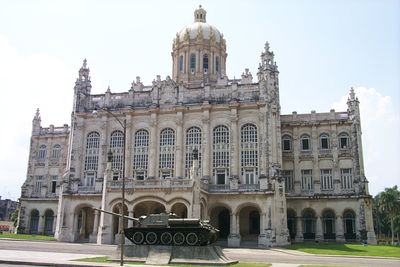
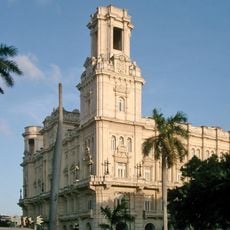
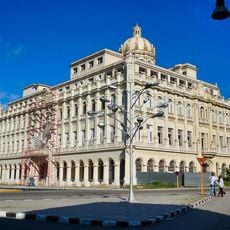
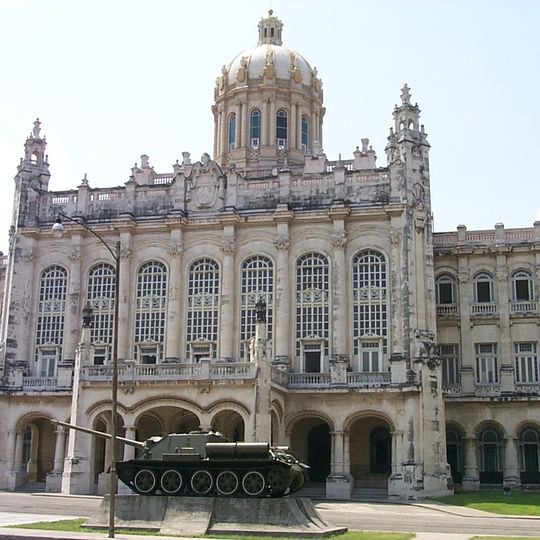
The Museum of the Revolution occupies the former Presidential Palace in Old Havana, designed by Rodolfo Maruri and Paul Belau and inaugurated in 1920. The pale stone building has a domed central tower, two corner towers, a columned arcade at ground level and tall multi-paned windows above, with a balustrade and coat of arms on top. Tiffany Studios decorated the interior, whose Carrara marble floors and staircases lead through more than 30 exhibition rooms. A Soviet tank stands on a plinth in front.
Construction began in 1909 under Havana's provincial governor Ernesto Aubert, to designs by Rodolfo Maruri and Paul Belau, and the palace was inaugurated on 31 January 1920. In late 1917 President Mario García Menocal took the building from the provincial government so it could serve as the national presidential palace. It kept that role until 1959, housed the presidency and cabinet until 1965, and became the museum's permanent home on 4 January 1974.
The name recalls the political shifts that shaped the country, while the exhibits offer insight into personal stories of those involved. Visitors see uniforms, letters and everyday items that show how people lived and stood up for their beliefs at that time.
The building is located on Calle Refugio 1 in the center of the old quarter and opens daily from 10 AM to 5 PM. Different admission rates apply depending on the origin of visitors.
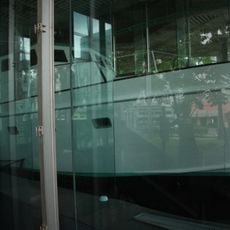
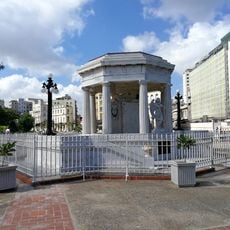
A small pavilion next to the main building preserves the sailboat Granma, which brought around eighty men from Mexico to Cuba in 1956. The vessel sits protected under a roof and can be viewed from all sides.
The community of curious travelers
AroundUs brings together thousands of curated places, local tips, and hidden gems, enriched daily by 93,820 contributors worldwide.