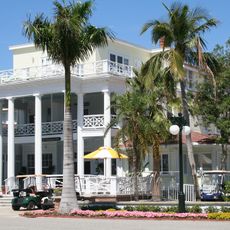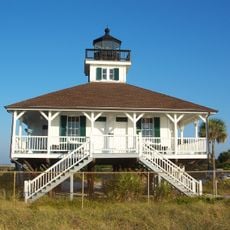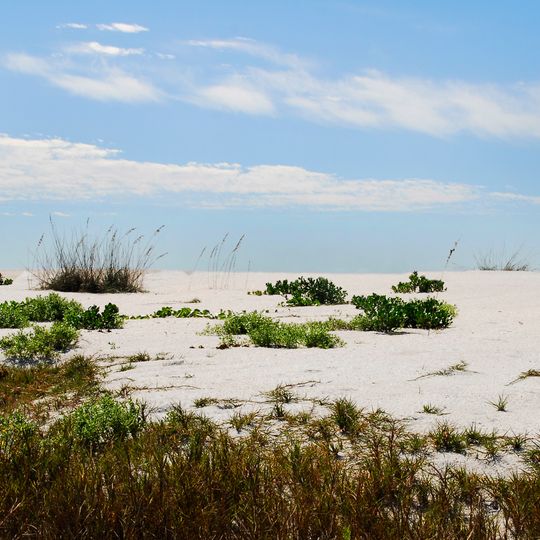
Cayo Costa State Park, Barrier island state park in Pine Island Sound, Florida.
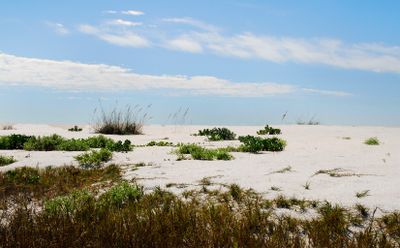
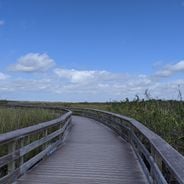
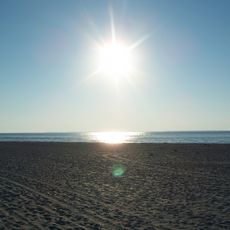
Cayo Costa State Park is a protected area on a barrier island in Pine Island Sound, Florida, covering over 2,400 acres of coastal landscape with pine forests, mangrove swamps, and roughly nine miles (14.5 kilometers) of sandy beach. The grounds extend along the full length of the island and provide habitat for wading birds, sea turtles, and dolphins often seen in the shallow waters around the shoreline.
Cayo Costa was occupied by the Calusa people until about 1700, and they built shell mounds on the island. From the early 18th century, fishermen from Cuba set up ranchos here to catch and process fish for the Havana market, operating through British and Spanish rule until the Second Seminole War forced them out. In the later 19th century Tervio "Captain Pappy" Padilla, born in the Canary Islands and a U.S. citizen from 1862, ran a rancho on the island; a cemetery holds his grave, his wife's, and those of about 30 Cuban fishermen who died in a 1910 hurricane.
The island was long called La Costa Island, and the park name keeps the Spanish word for coast. From the early 18th century Cuban fishermen ran ranchos here, salting and drying fish for the Havana market. Tervio "Captain Pappy" Padilla, from the Canary Islands, ran such a station in the later 19th century; a cemetery holds his grave and those of about 30 Cuban fishermen killed in a 1910 hurricane.
The park is reached only by charter boat (with or without a captain), private boat or ferry; no road connects Cayo Costa, which lies about 12 miles (19 km) west of Cape Coral, south of Boca Grande and north of North Captiva Island. The island has nine miles (14 km) of beach, so plan for walking and carry in drinking water and supplies.
Currents and the position of the island cause an unusual number of seashells to wash ashore, including rare specimens such as the Junonia that draw collectors from across Florida. Visitors arriving early in the morning after a storm often find freshly deposited shells in large numbers along the waterline.
The community of curious travelers
AroundUs brings together thousands of curated places, local tips, and hidden gems, enriched daily by 93,239 contributors worldwide.