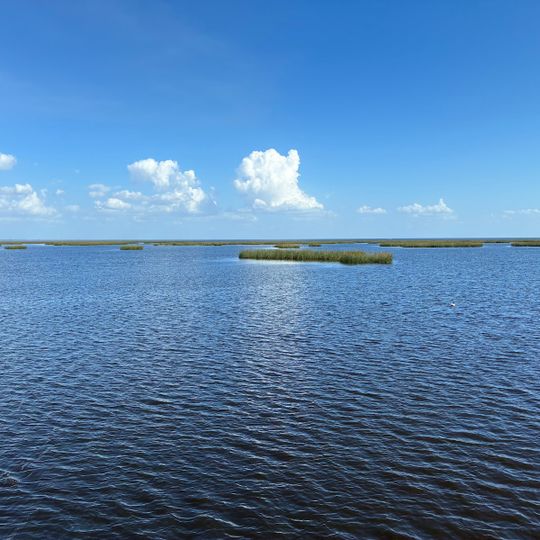
Lake Okeechobee, Freshwater lake in South Florida, US.
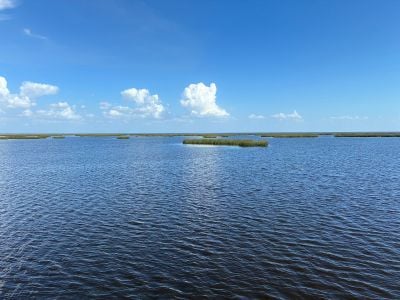
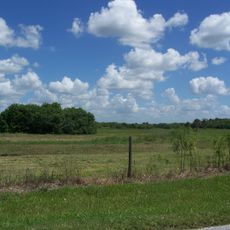
Lake Okeechobee is a broad freshwater lake in southern Florida covering about 730 square miles, with an average depth of only 9 feet. Its dark water is bordered on the east by a straight, lined edge and a thin strip of land beyond which lie geometric green and brown fields. A channel enters from the north, and the shoreline is uneven with small inlets and points.
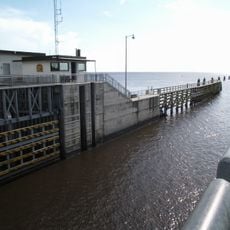
In the 1920s two devastating storms caused severe flooding that killed hundreds of people and led to the construction of a major protective barrier. The building of the Herbert Hoover Dike began in the 1930s and changed the relationship between the lake and surrounding communities forever.
The name Okeechobee comes from Hitchiti words oki (water) and chubi (big). Locals also call it The Lake or The Big O, and the older name Lake Mayaimi meant "big water" in the language of the Mayaimi people. Port Mayaca on the east shore keeps the name of the Mayaca, who settled near the lake in the early 18th century.
Access to the shore is available at several public boat ramps and parks that work well for fishing and boating. Weather can change quickly, especially during warmer months when thunderstorms are common.
All five surrounding counties—Glades, Okeechobee, Martin, Palm Beach and Hendry—meet at a single point near the middle of the lake, the only such spot in the United States. The lake bed also holds an estimated 33,000 tonnes of phosphorus from surrounding farms.
The community of curious travelers
AroundUs brings together thousands of curated places, local tips, and hidden gems, enriched daily by 92,254 contributors worldwide.