Fort Mose Historic State Park, Historic fort and state park in St. Augustine, United States.
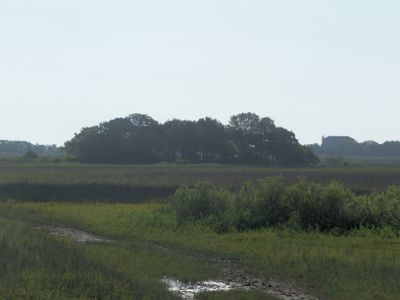
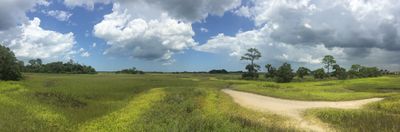
Fort Mose Historic State Park protects 24 acres (9.7 ha) of salt marsh and shoreline on the western side of the waterway separating the mainland from the coastal barrier islands, north of St. Augustine. The park holds a visitors' center with a small museum and a replica of the 1738 fort, opened in May 2025. The site of the second fort, occupied from 1752 to 1763, was found in a 1986 archaeological dig.
The Spanish governor founded the settlement in 1738 for people who fled from British colonies in the Carolinas. This settlement was later destroyed and then rebuilt before being abandoned in 1763 when Spain ceded Florida to Britain.
The name Gracia Real de Santa Teresa de Mose combines a royal title with that of the Mose Creek tidal channel beside the settlement. The freedmen who lived here kept Spanish baptismal names such as Francisco Menéndez, Antonio Caravallo and Ana María de Escobar. Fort Mose now hosts outdoor concerts, including a blues concert held in February 2023.
The park lies on the salt marsh along Robinson Creek, about 3 km north of St. Augustine, and is administered through Anastasia State Recreation Area. The 24-acre grounds hold a visitors' center with a small museum and a replica of the 1738 fort, opened in May 2025. The original 1738 fort site has never been located; the second fort's site, found in a 1986 dig, is the protected archaeological area.
The location of the 1738 fort has never been found; the site uncovered in a 1986 archaeological dig is that of the second fort, occupied from 1752 to 1763. The 24-acre park around it is managed through Anastasia State Recreation Area.
The community of curious travelers
AroundUs brings together thousands of curated places, local tips, and hidden gems, enriched daily by 92,589 contributors worldwide.