Okefenokee Wilderness, National Wildlife Refuge and Wilderness Area in southern Georgia, United States.
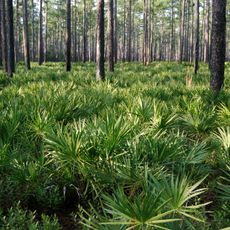
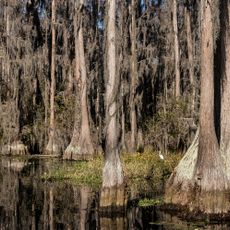
The Okefenokee is a vast wetland in southern Georgia with interlocking waterways, cypress forests, and distinct ecological zones. The landscape shifts between open water, dense trees, and boggy islands that together form a connected habitat for thousands of plant and animal species.
Native Americans lived in the swamp from as early as 2500 BC, and the Seminoles were the last tribe to take refuge there before troops under General Charles Rinaldo Floyd ended their presence during the Second Seminole War of 1838–1842. In 1891 the Suwannee Canal Company bought 238,120 acres to drain the swamp for plantations; when that failed it logged the cypress, and more than 431 million board feet of timber were removed by 1927. President Franklin D. Roosevelt established the refuge by Executive Order 7593 in 1937, and the Okefenokee Wilderness Act of 1974 gave 353,981 acres wilderness status.
The name "Okefenokee" is often translated as "land of trembling earth", but it likely comes from Hitchiti oki fanôːki, "bubbling water". The peat floor, up to 15 feet thick, trembles when the surface is stomped. The Seminoles were the last tribe to take refuge in the swamp, until troops under General Charles Rinaldo Floyd ended their presence during the Second Seminole War, 1838–1842.
Visit during cooler months when insect activity is lower and water levels make navigation easier. Bring plenty of water and proper gear, as the terrain is remote and services are limited along the trails.
The swamp's peat, up to 15 feet thick, is so unstable that trees and bushes tremble when the surface is stomped, which is how the swamp got its name. Water from the Suwannee River Sill area is used worldwide by scientists as a standard reference.
The community of curious travelers
AroundUs brings together thousands of curated places, local tips, and hidden gems, enriched daily by 92,677 contributors worldwide.