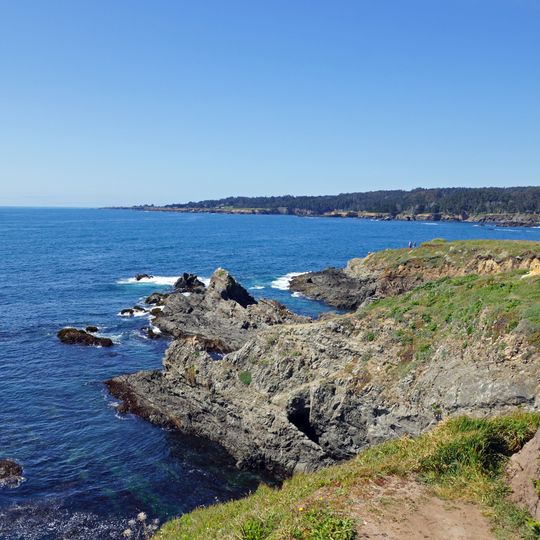
Russian Gulch State Park, Nature reserve in Mendocino County, United States.
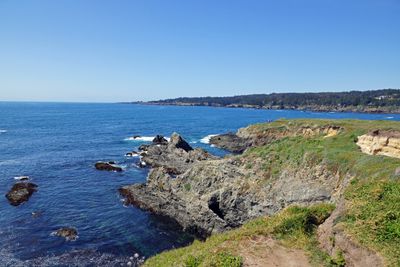
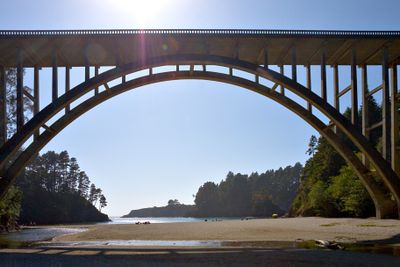
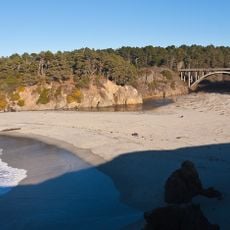
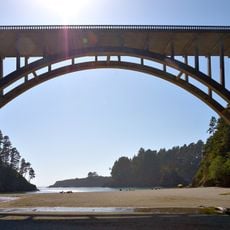
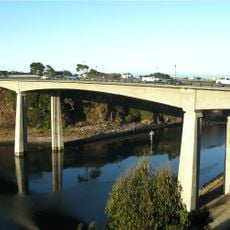
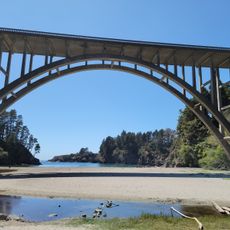
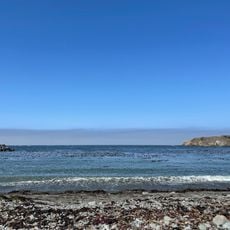
Russian Gulch State Park is a California State Park in coastal Mendocino County, 2 mi (3.2 km) north of Mendocino and 7 mi (11 km) south of Fort Bragg. It has 7,630 ft (2,330 m) of rocky ocean shores, is about 0.75 mi (1.21 km) wide north to south at its widest, and extends about three miles east to west. Highway 1 crosses the gulch on the Frederick W. Panhorst Bridge, a large concrete arch bridge built in 1940. The smaller western portion is largely headlands with a blowhole and picnic areas; the larger eastern portion holds a campground, park headquarters, and trails for bicycles, hikers, and horses.
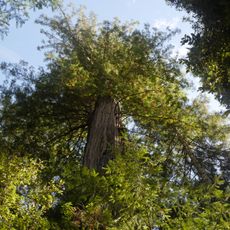
U.S. government surveyors named the cove for Russian fur trappers who founded Fort Ross 50 miles south; local tradition holds that a deserter from Fort Ross lived here. In the late 19th century schooners took on coast redwood lumber and passengers at the cove, and iron rings used to hold ropes and move lumber remain on the headlands. The Native Sons of the Golden West began a drive for a park in 1928, and Russian Gulch State Park was founded in 1933.
The name Russian Gulch was given by U.S. government surveyors in honor of the Russian fur trappers who founded Fort Ross 50 miles south; local tradition holds that a deserter from Fort Ross lived in the gulch. Iron rings set into the headlands, used to hold ropes and move coast redwood lumber when schooners docked in the cove, can still be seen.
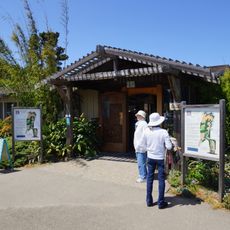
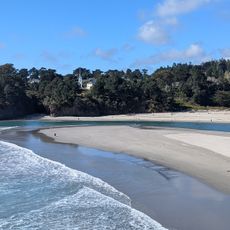
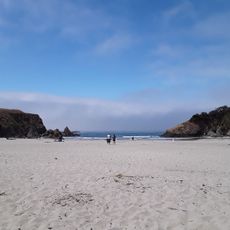
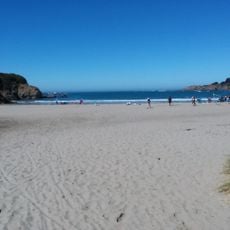
The park entrance sits on the west side of Highway 1, north of the Frederick W. Panhorst Bridge, and a one-lane road passes under the bridge to the campground and trailheads on the east side. The 2.5 mi trail to the 36 ft waterfall follows an abandoned logging road along the creek. The small beach has a restroom and outdoor shower.
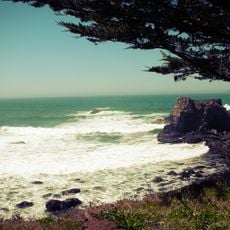
The western headlands hold a blowhole, a hole in the rock where incoming waves force spray upward. It sits among picnic areas near the park entrance off Highway 1, north of the 1940 Frederick W. Panhorst Bridge. The same headlands still carry iron rings that schooners used to secure ropes while loading coast redwood lumber in the late 19th century.
The community of curious travelers
AroundUs brings together thousands of curated places, local tips, and hidden gems, enriched daily by 94,336 contributors worldwide.