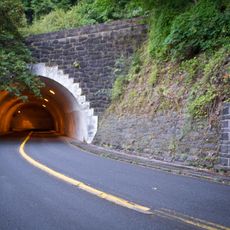
Rocky Butte, Extinct volcanic cinder cone in Portland, United States.
Rocky Butte is an extinct cinder cone in northeast Portland, Oregon, reaching 613 feet (187 m) and rising about 400 feet above the surrounding plain. It is the eroded core of a Pleistocene volcano, with two vents and slopes of basaltic andesite. Joseph Wood Hill Park and the Rocky Butte Natural Area cover its flanks, and a decommissioned rotating airway beacon stands at the summit.
The cone formed from volcanic activity occurring between 285,000 and 500,000 years ago. During the 1930s, the Works Progress Administration built a tunnel, park, and other structures here using local basalt stone.
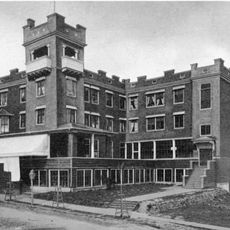
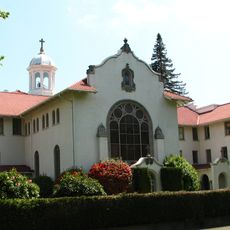
The butte was called Mowich Illahee, then Wiberg Butte, before taking the name Rocky Butte. Its slopes held the Rocky Butte Jail, Judson Baptist College and Hill Military Academy; today Joseph Wood Hill Park and Portland Bible College occupy the hill, and a decommissioned rotating airway beacon still stands at the summit.
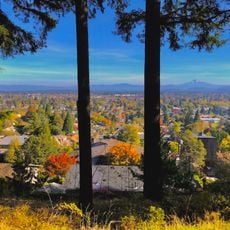
Rocky Butte sits beside Interstate 205 in northeast Portland, reached by NE Rocky Butte Road, which climbs through forest to the summit viewpoint. The upper road is narrow and winding, with limited turning space at the top, so larger vehicles should park below. The summit viewpoint faces the Cascade volcanoes and Mount Scott to the southeast.
The summit holds a decommissioned rotating airway beacon that still stands, a relic of early aviation navigation. The butte's upstream side was heavily eroded by the Missoula Floods between 21,000 and 15,000 years ago, which buried smaller cones under up to 98 feet of silt while Rocky Butte survived.
The community of curious travelers
AroundUs brings together thousands of curated places, local tips, and hidden gems, enriched daily by 93,788 contributors worldwide.