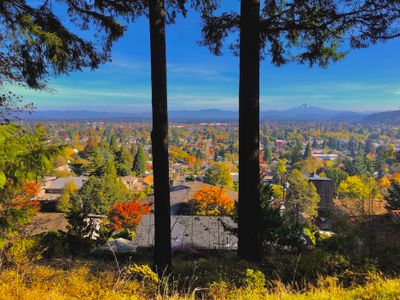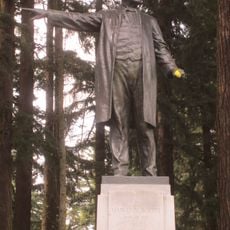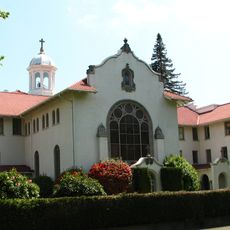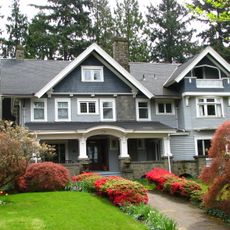
Mount Tabor, Extinct volcanic vent and city park in Southeast Portland, United States
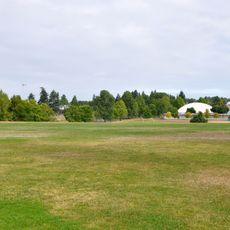
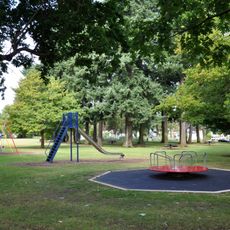
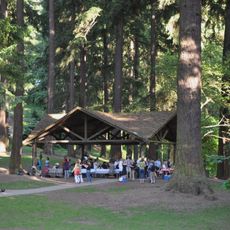
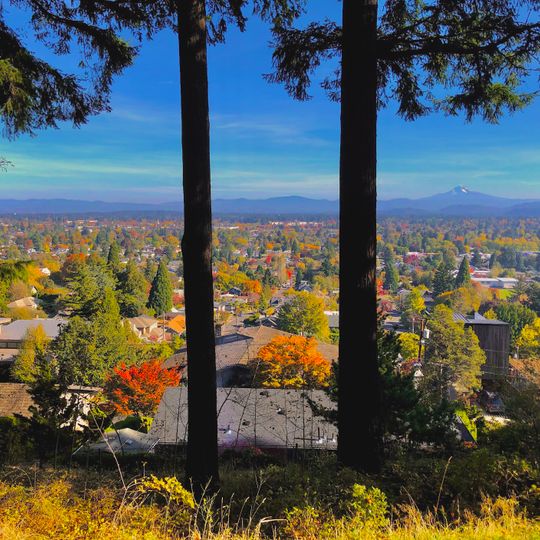
Mount Tabor is an extinct volcanic vent in Southeast Portland, its peak at 636 feet (194 m), roughly two-thirds of that above the surrounding land at about 200 feet. Near the top, where a basketball court and outdoor amphitheater now sit, part of the cinder cone was cut away and the rock is visible to park visitors; the remaining cinders paved the nearby parking lot. The 196-acre park was designed by Emanuel Tillman Mische of the Olmsted Brothers firm.
Road construction workers discovered the volcanic nature of this peak in 1913, recognizing it as part of the Boring Lava Field formed during the Plio-Pleistocene era. This finding revealed that Portland sits atop an area shaped by volcanic activity millions of years ago.
Four open reservoirs built between 1894 and 1911 stand on the grounds, now protected as historical sites that show how Portland once stored and managed its water supply. Visitors can still see these structures as they walk the trails.
Three marked trails loop around the volcanic peak at different distances: the Red Trail covers roughly 1 mile, the Green Trail roughly 1.7 miles, and the Blue Trail roughly 3 miles. All paths are well-maintained and provide options for different fitness levels and time availability.
Mount Tabor is one of only six U.S. cities' volcanoes, alongside Jackson Volcano in Jackson, Mississippi, Diamond Head in Honolulu, Glassford Hill in Prescott Valley, Pilot Knob in Austin and Pilot Butte in Bend. In 2023 Quiet Parks International named the park the first Urban Quiet Park in the United States.
The community of curious travelers
AroundUs brings together thousands of curated places, local tips, and hidden gems, enriched daily by 93,799 contributors worldwide.