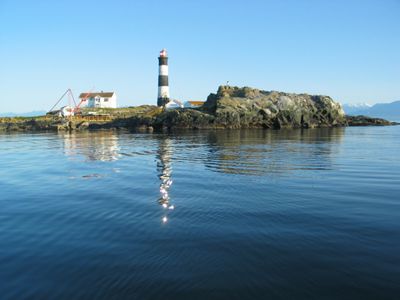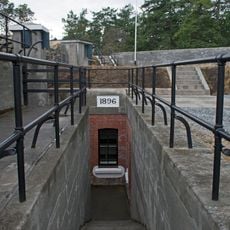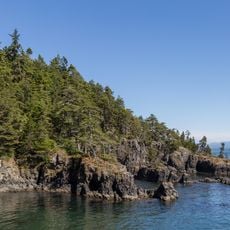
Race Rocks Light, Maritime lighthouse in Capital Regional District, Canada
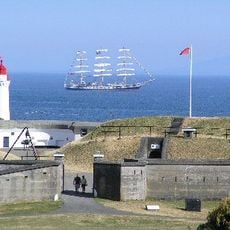
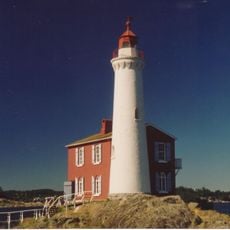
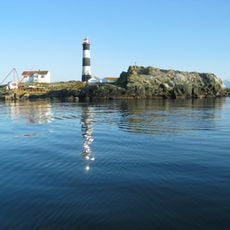
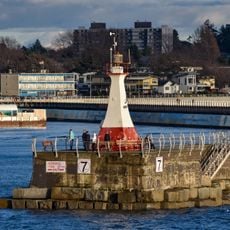
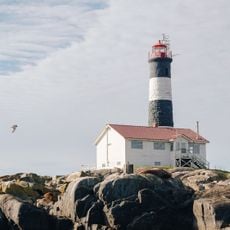
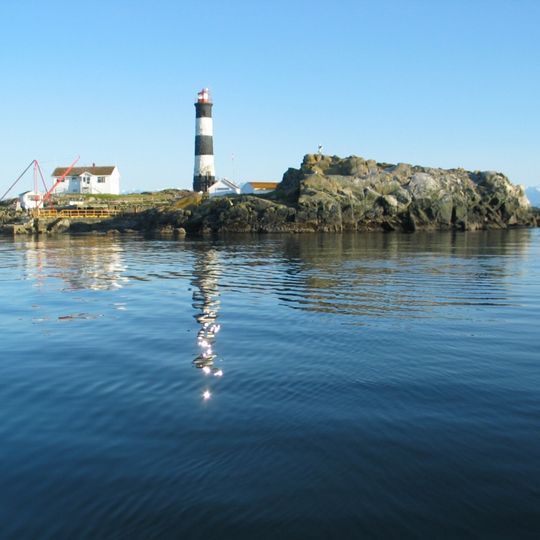
Race Rocks Light is a cylindrical stone tower marked by alternating black and white horizontal bands, standing on a small rocky island in the Strait of Juan de Fuca off the southern tip of Vancouver Island. The tower rises about 24 meters (79 feet) and is listed as a recognized federal heritage building of Canada.
The lighthouse was built in 1860 and was among the first two on Canada's Pacific coast, funded by the colonial British government to address the number of shipwrecks in the area. The stones used for its construction were shipped from Scotland, as local materials were not considered adequate.
The site carries the First Nations name Xwayen and is managed today as part of an ecological reserve where indigenous knowledge and marine research work side by side. Visitors who reach the island can observe how the local community remains involved in its stewardship.
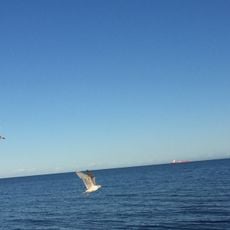
The island is only reachable by boat, and sea conditions in the strait can change quickly, so careful planning is needed before any visit. The site is a protected ecological reserve, and landing without prior permission is generally not allowed.
A tidal power system was installed at Race Rocks in 2006, making it one of the first lighthouse sites in North America to use the movement of the sea to generate electricity. This means the light and the station's equipment run largely on energy drawn from the tidal currents that once made the site so dangerous for sailors.
The community of curious travelers
AroundUs brings together thousands of curated places, local tips, and hidden gems, enriched daily by 90,758 contributors worldwide.