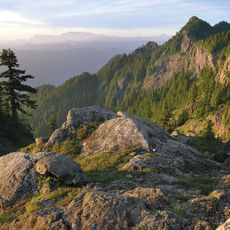
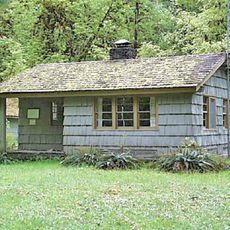
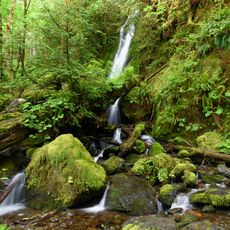
Quinault Rainforest, Temperate rainforest in the Olympic National Park and Olympic National Forest, Washington, United States.
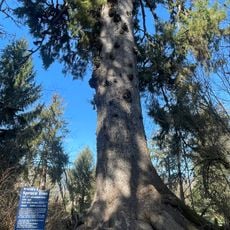
The Quinault Rainforest is a temperate rain forest in the valley of the Quinault River and Lake Quinault, on the western side of the Olympic Mountains in Washington. The valley, called the "Valley of the Rain Forest Giants," holds the largest known Western Red Cedar, Sitka Spruce, Western Hemlock, Alaska Cedar and Mountain Hemlock, plus five of the ten largest Douglas firs. The valley was carved by a glacier and ends at Lake Quinault.
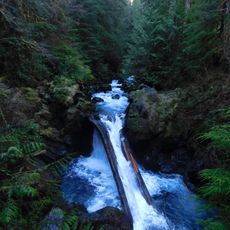
The Quinault Valley formed through ancient glacial movement, carving out a natural passage between the Olympic Mountains and Lake Quinault. This geological process shaped the land thousands of years ago and continues to influence how water flows through the forest today.
The valley's name comes from the Quinault, the people whose reservation surrounds Lake Quinault and the forest. The Quinault Indian Nation runs the lake's north-shore lodge and a museum displaying baskets woven from local cedar bark and roots, a craft passed down through families.
The Quinault Valley is reached from the western side of the Olympic Peninsula, with lodges and resorts on both sides of Lake Quinault. Trails such as the Quinault Loop Trail and Maple Glade Trail start near the lake. The forest receives about 17 feet (5.2 m) of rain a year, so waterproof clothing and sturdy boots are needed.
The valley is one of only two places in North America where Venus flytraps grow outside the Carolinas; the other is Liberty County, Florida. Plant enthusiasts are thought to have introduced them here deliberately, judging the valley's conditions right for the plants.
The community of curious travelers
AroundUs brings together thousands of curated places, local tips, and hidden gems, enriched daily by 93,773 contributors worldwide.