Havasu Falls

Log in to your account

AroundUs is a community-driven map of interesting places, built by curious explorers like you. It grows with every review, story, and photo you share.
Connect to save your favorite spots, contribute locations, and create personalized routes.
By continuing, you accept our Terms and Conditions and our Privacy Policy
Add to collection
Map
Suggest a change
Share

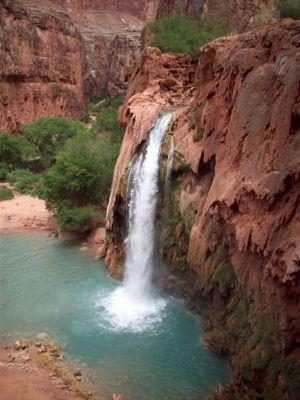
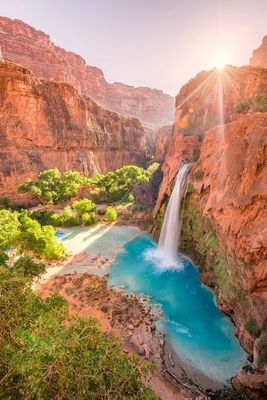
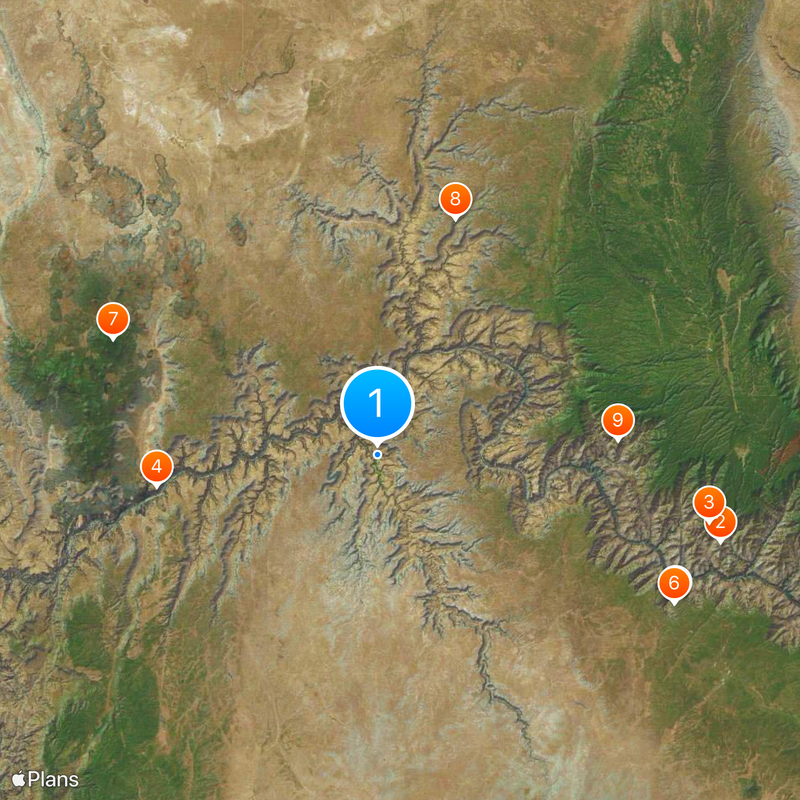
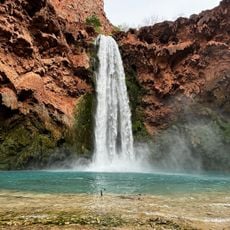
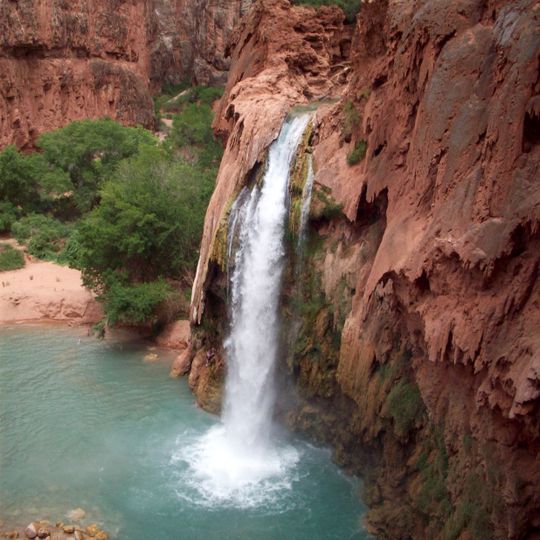
Havasu Falls, Turquoise waterfall in Grand Canyon, United States.

The 120-foot Havasu Falls cascade into a mineral-rich blue-green pool surrounded by red limestone cliffs and natural travertine formations.

The Havasupai tribe has maintained continuous residence in this section of the Grand Canyon for over 800 years, protecting these sacred waters.

The name Havasupai translates to 'people of the blue-green waters,' reflecting their deep connection to these mineral-rich falls.

Access requires an advance permit, an 8-mile hike from Hualapai Hilltop, and mandatory overnight camping or lodge accommodation in Supai Village.

The high calcium carbonate content constantly reshapes the waterfall, sometimes splitting it into multiple streams and creating new limestone formations.

Location: Havasupai Indian Reservation

Part of: Havasu Creek

GPS coordinates: 36.25521,-112.69785

Latest update: May 26, 2025 19:13

The most beautiful waterfalls and cascades in the world

Waterfalls have a way of drawing people in. The sound of falling water, the mist that rises from the base, the way light catches the spray. Some of the most striking examples sit in places that remain relatively quiet, where the journey itself becomes part of the experience. These destinations reward travelers who make the effort, offering moments of solitude that are increasingly rare around natural landmarks. This collection includes places like the limestone terraces of Plitvice Lakes in Croatia, where a chain of interconnected pools spills from one to the next through forest shade. Or the red sandstone walls of Coyote Gulch in Utah, where water carved out hidden alcoves and pools over countless seasons. In India, Nohkalikai Falls drops from a forested plateau into a green pool far below. China's Huangguoshu Waterfall has a cave tucked behind the curtain of water itself. At the Vietnam-China border, Ban Gioc-Detian spreads wide across the landscape, while Angel Falls in Venezuela tumbles nearly a thousand meters from a flat topped mountain. Norway's Geirangerfjord hosts the Seven Sisters, a cluster of parallel streams that flow straight into the fjord. Iceland's Dettifoss sends an immense volume of glacial water over black volcanic rock. South Africa's Tugela Falls descends in stages from the dramatic cliff face of the Drakensberg range. And in the Philippines, Kawasan Falls creates a series of turquoise pools beneath a canopy of tropical growth. Each place has its own character, shaped by the rock, the climate, and the surrounding terrain.

Natural areas and historic sites in Arizona

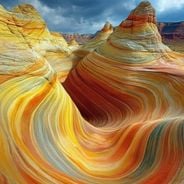
Arizona contains geological formations spanning millions of years alongside evidence of Spanish colonial settlement and prehistoric cultures. The landscape includes sandstone canyons such as Antelope Canyon X and Canyon de Chelly National Monument, extensive desert areas with saguaro and organ pipe cacti, and volcanic remnants at Sunset Crater. Historical sites include Spanish missions like Tumacácori, pueblo ruins at Montezuma Castle, and mining towns such as Bisbee and Jerome. The state holds significant paleontological sites at Petrified Forest National Park, where fossilized tree trunks from the Triassic period lie exposed, and cave systems like Kartchner Caverns with active speleothem formations. The Vermilion Cliffs region displays layered sandstone formations including The Wave, while the Chiricahua Mountains show volcanic rock pinnacles formed from welded ash. Waterfalls such as Havasu Falls and Grand Falls result from geological faulting and seasonal water flow. Archaeological sites document occupation by the Hohokam, Sinagua, and Ancestral Puebloans between 300 and 1400 CE. Tonto Natural Bridge forms one of the largest travertine bridges in North America, while Besh-Ba-Gowah shows Salado culture construction methods from the 13th century. The territory spans from the Sonoran Desert in the south to the Colorado Plateau in the north, creating distinct climate zones and ecosystems within a compact area.

Reviews

Visited this place? Tap the stars to rate it and share your experience / photos with the community! Try now! You can cancel it anytime.

« Havasu Falls - Turquoise waterfall in Grand Canyon, United States » is provided by Around Us (aroundus.com). Images and texts are derived from Wikimedia project under a Creative Commons license. You are allowed to copy, distribute, and modify copies of this page, under the conditions set by the license, as long as this note is clearly visible.

Discover hidden gems everywhere you go!

From secret cafés to breathtaking viewpoints, skip the crowded tourist spots and find places that match your style. Our app makes it easy with voice search, smart filtering, route optimization, and insider tips from travelers worldwide. Download now for the complete mobile experience.

Around Us App Screenshot

A unique approach to discovering new places

Le Figaro

All the places worth exploring

France Info

A tailor-made excursion in just a few clicks

20 Minutes