Wupatki National Monument, Ancient pueblo site in Coconino County, United States.
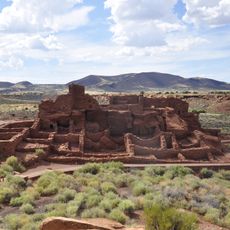
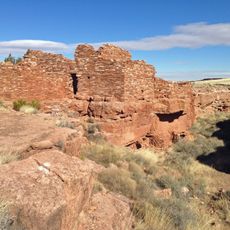
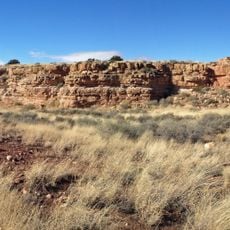
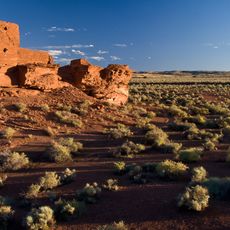
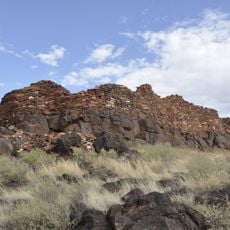
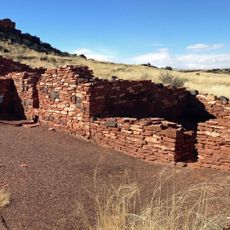
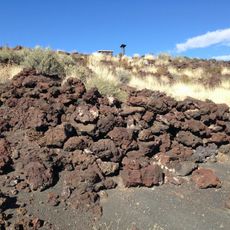
Wupatki National Monument is a pueblo of over 100 rooms built around a natural rock outcrop from thin, flat slabs of red Moenkopi sandstone held with mortar. The photograph shows a low, broad wall with a rounded, stepped edge on the left and a higher blocky mass on the right, with a small dark opening near its top. The stonework forms horizontal courses on a sloping, rocky red-earth surface.
Wupatki Pueblo was built by Ancestral Pueblo peoples, including the Cohonina, Kayenta, and Sinagua, around a natural rock outcrop. A major influx of residents followed the Sunset Crater eruption of the 11th century, when volcanic ash improved soil fertility and water retention. By 1182, 85 to 100 people lived at the pueblo, but the site was permanently abandoned by 1225.
The structures display building methods developed by Ancestral Pueblo peoples who lived here and traded with distant communities. Walking through the ruins, you notice how inhabitants adapted their design to conserve water and manage the harsh desert environment.
Visitors can walk marked trails and view several buildings up close, with some paths offering easy access to the main structures. Coming early in the day helps since afternoon sun becomes very strong and shade is scarce across the open terrain.
One location on the grounds features a natural opening in the earth where air continuously flows out or draws in depending on atmospheric pressure shifts. Visitors can feel this rare phenomenon firsthand as the air moves steadily through the ground.
The community of curious travelers
AroundUs brings together thousands of curated places, local tips, and hidden gems, enriched daily by 94,515 contributors worldwide.