Burgess Shale, Paleontological site in Yoho National Park, Canada
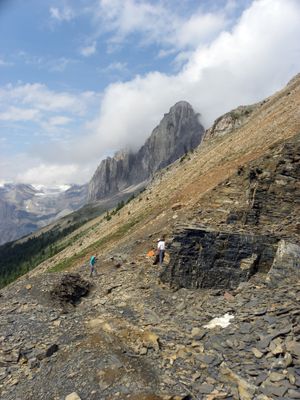
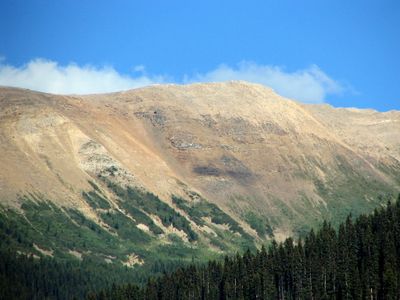
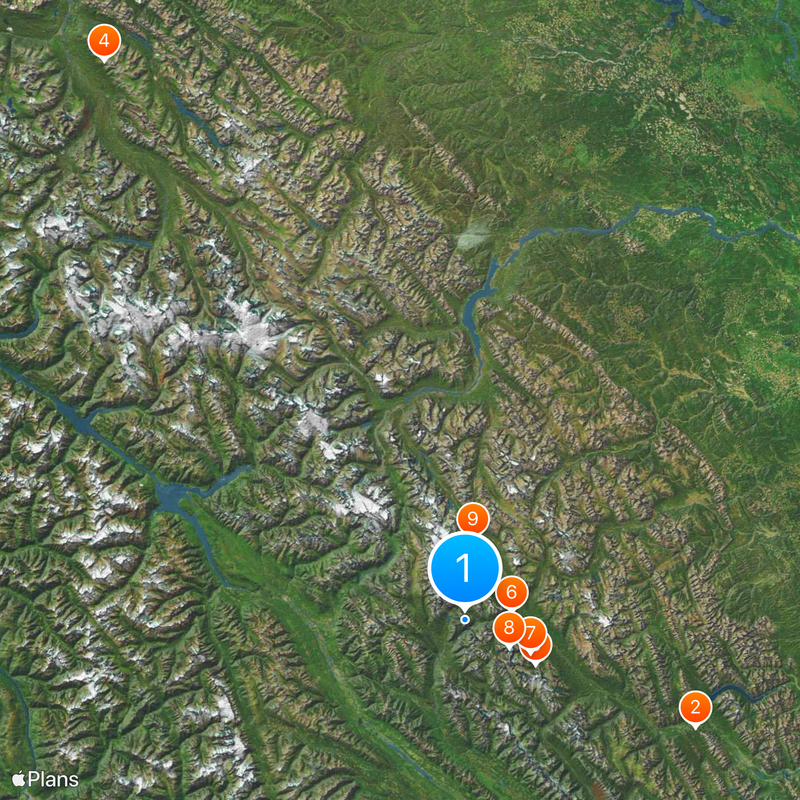
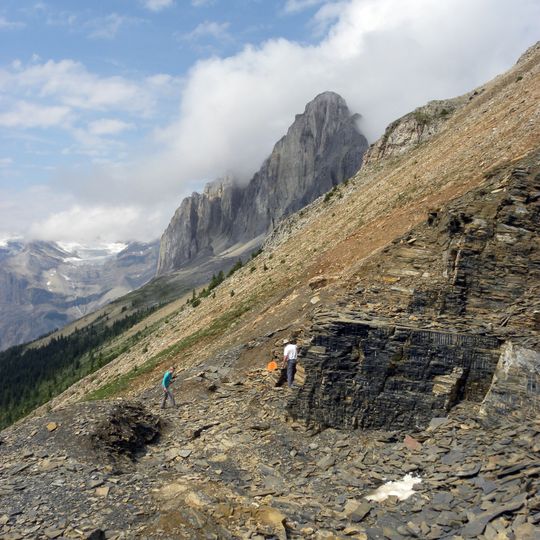
The Burgess Shale is a fossil-bearing black shale in the Canadian Rockies of British Columbia, exposed near Field in Yoho National Park and at Kicking Horse Pass, with another outcrop 42 km south in Kootenay National Park. The Walcott Quarry lies on the flanks of Fossil Ridge, and the rock face shows layered tan, brown and grey shale with diagonal strips of green vegetation and coniferous trees at its base.
Charles Walcott came across the fossil layers in 1909 during an expedition and returned regularly in the following years to extract tens of thousands of specimens. Later excavation campaigns starting in the 1960s brought new interpretations about the development of early animal forms.
The name comes from Burgess Pass, near the ridge where the fossil beds lie. The site is a lagerstätte, a term for rock layers with exceptionally preserved fossils. Visitors reach the Walcott Quarry only on a guided hike booked through the Field visitor centre; collecting is prohibited.
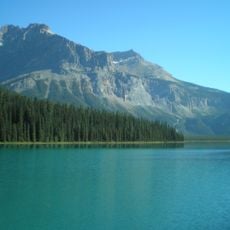
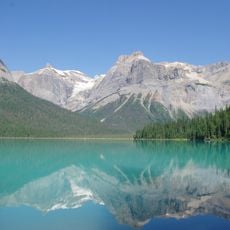
The Walcott Quarry lies above Emerald Lake, reached by climbing toward Burgess Pass and Fossil Ridge; the site itself is closed to independent entry. Guided hikes must be booked in advance through the visitor centre in the town of Field. The route is long and gains height, so plan for cold weather and carry water.
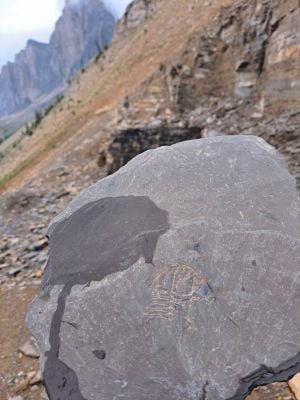
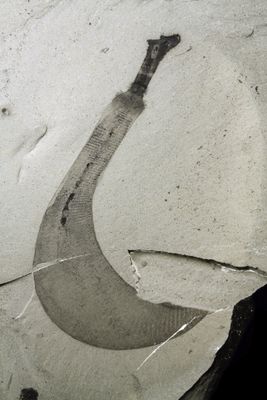
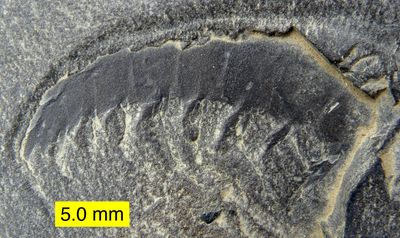
The specimens show soft parts like gut tracts and gills that are usually absent in fossils because they normally decay quickly. Some animals possess body plans that cannot be placed into any living animal group.
The community of curious travelers
AroundUs brings together thousands of curated places, local tips, and hidden gems, enriched daily by 92,679 contributors worldwide.