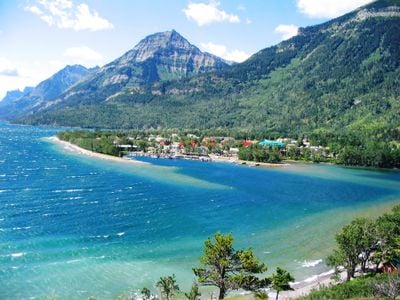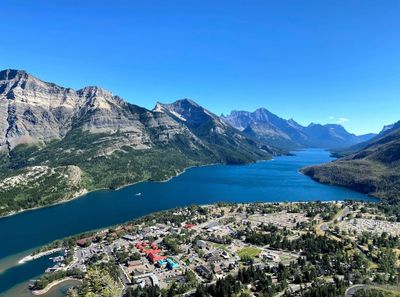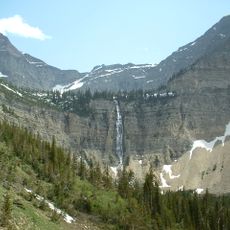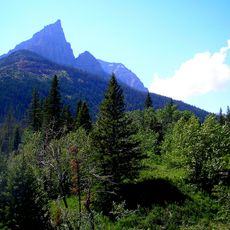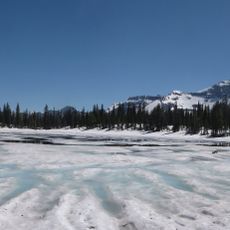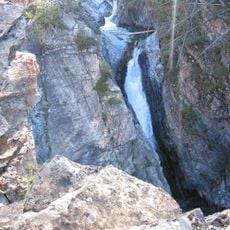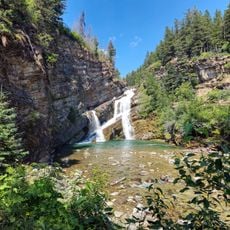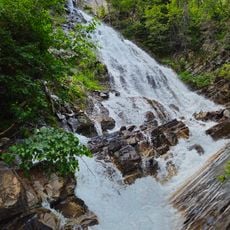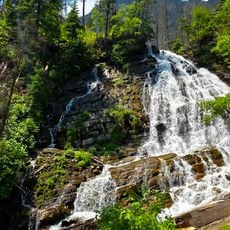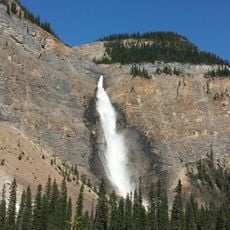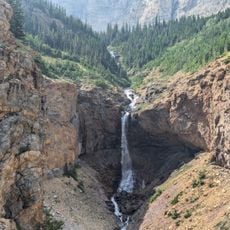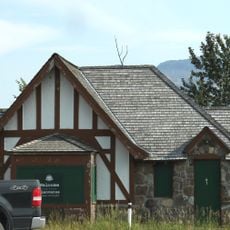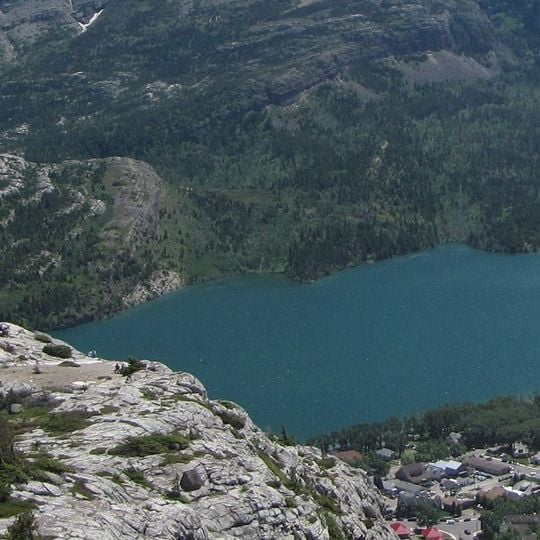
Waterton Lakes National Park, National park at prairie-mountain intersection in Alberta, Canada.
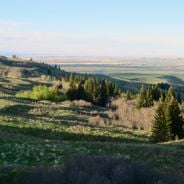
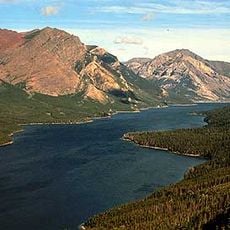
Waterton Lakes National Park is a national park in southwestern Alberta where the prairies meet the Canadian Rocky Mountains and several lakes lie in deep valleys. The landscape shifts quickly between open grasslands, dense conifer forests, and steep rock walls rising above the water.
The Canadian government established this protected area in 1895, only a few years after creating the country's first national parks. During the 1930s it joined with Glacier National Park in Montana to form a cross-border peace park.
The name Waterton comes from a British naturalist and recalls the early scientific exploration of the region during the 19th century. On the trails today, visitors often meet hikers and photographers capturing the transitions between grassland and mountain terrain.
Trails lead from the flat lakeshore to higher mountain ridges, where weather can change quickly and warm clothing is useful. During summer and fall the main routes are easily accessible, while some sections close in winter.
The first oil well in western Canada was drilled in 1902 by John Lineham's Rocky Mountain Drilling Company at oil seeps near Cameron Creek. It yielded only a small amount of 34° API sweet oil, and neither it nor seven later attempts produced commercially. The site became a national historic site in 1965.
The community of curious travelers
AroundUs brings together thousands of curated places, local tips, and hidden gems, enriched daily by 94,451 contributors worldwide.