Willow Creek Formation, Geological formation in southern Alberta, Canada
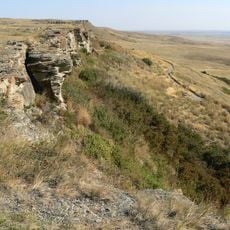
The Willow Creek Formation is a rock sequence in southern Alberta composed of alternating layers of reddish-gray, olive-gray, and purple mudstone interspersed with various sandstone types. The layers display distinct color variations and grain sizes that reflect changing environmental conditions during their deposition.
The formation was named and first documented in 1883 by geologist George Mercer Dawson, taking its name from Willow Creek, a tributary of the Oldman River. This early observation established the foundation for later research into the Late Cretaceous to Early Paleocene layers.
Geologists and earth science students regularly examine the formation to understand the environmental conditions of Late Cretaceous to Early Paleocene periods.
Access is available through designated geological survey sites in the southwestern region, where visitors can observe the exposures in their natural setting. The best time to explore is during drier seasons when the terrain is easily accessible.
Preserved dinosaur remains have been found within the Cretaceous layers alongside diverse sedimentary structures, offering rare glimpses into ancient life. These discoveries make this location valuable for reconstructing landscapes from that distant era.
The community of curious travelers
AroundUs brings together thousands of curated places, local tips, and hidden gems, enriched daily by 90,907 contributors worldwide.