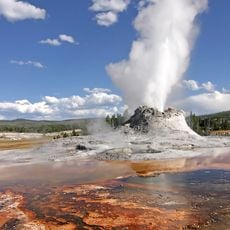
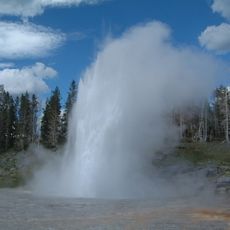
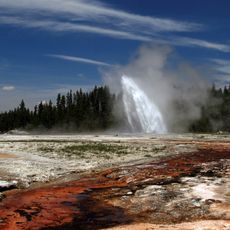
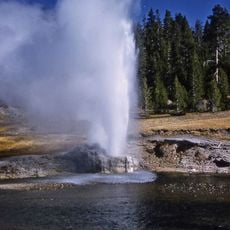
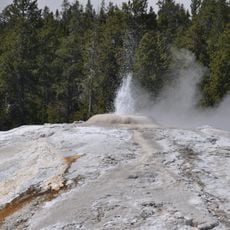
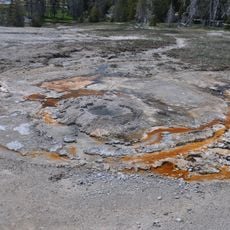
Giant Geyser, Cone geyser in Upper Geyser Basin, Yellowstone National Park, US
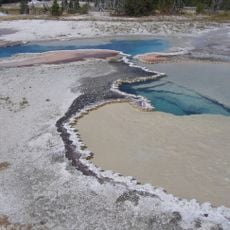
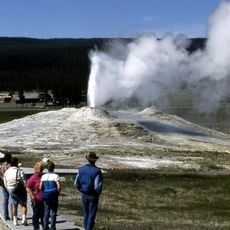
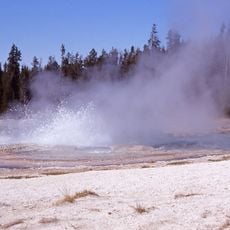
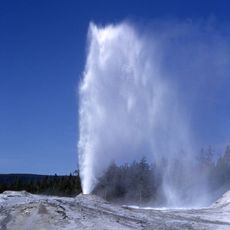
Giant Geyser is a cone-shaped geyser in the Upper Geyser Basin of Yellowstone National Park that ejects water and steam during eruptions. The hot spring sits among other geothermal features in a landscape formed by underground heat and mineral-rich water deposits.
The geyser was first documented in 1870 during an exploration expedition and named for its size and power compared to others in the area. Its eruption frequency has changed over the decades since its discovery.
The name Giant was given on September 18, 1870, by the Washburn-Langford-Doane Expedition, which named seven geysers in the Upper Geyser Basin during a day and a half of exploration. Nathaniel P. Langford's 1871 Scribner's account compared the crater to a miniature model of the Coliseum.
Visitors can watch this geyser from marked trails and designated viewing areas throughout the basin. Pay attention to warning signs and keep distance from the hot water and mineral formations.
Giant's eruptions depend on brief "hot periods" lasting only a few minutes, when nearby springs on its platform grow more active and Giant itself splashes harder. Most hot periods end without an eruption, and the next may come tens of minutes to hours later.
The community of curious travelers
AroundUs brings together thousands of curated places, local tips, and hidden gems, enriched daily by 92,632 contributors worldwide.