Wood Mountain Post Provincial Park, Historic provincial park in Saskatchewan, Canada
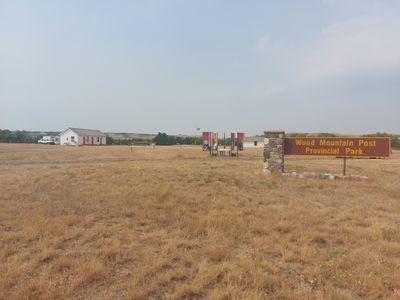
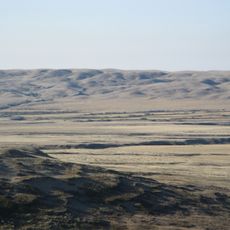
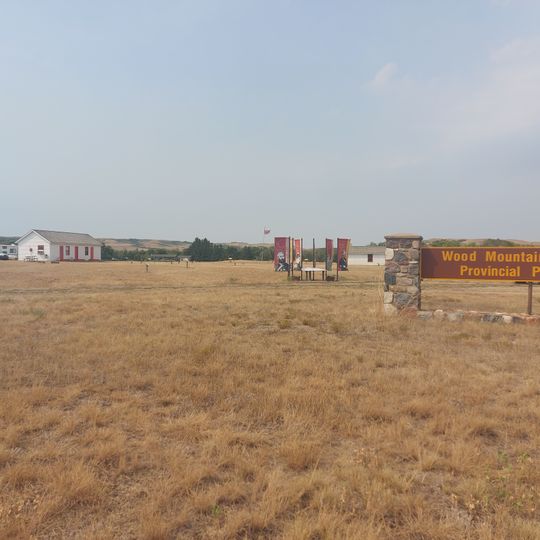
Wood Mountain Post Provincial Park is a historic park in Saskatchewan featuring two reconstructed buildings from the North-West Mounted Police era. The site sits along Highway 18 and spans about 5.5 hectares (13.6 acres) overlooking the border landscape.
The post was established in 1887 as a border station for the North-West Mounted Police and served to monitor the Canada-United States boundary. It remained active until 1918, when the military presence in the region was reduced.
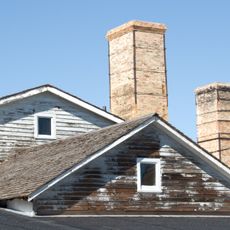
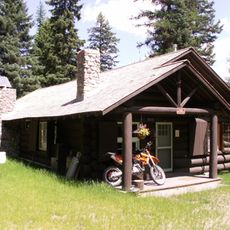
The park's name comes from the Wood Mountain Hills, and the site lies beside Wood Mountain Creek. The reconstructed barracks and kitchen/storehouse were rebuilt on their original foundations in the 1960s, and the outlines of other former buildings are marked. Recovered artefacts and the cellar and trail locations are displayed, telling of Major James Walsh's negotiations with Chief Sitting Bull.
The park lies along Highway 18, about 8 km south of Wood Mountain village and 35 km north of the Canada–United States border. A picnic area is on site, and the neighbouring Wood Mountain Regional Park has a campground. The two reconstructed buildings stand on their original locations, with the foundations of other former buildings outlined nearby.
Major James Walsh negotiated at this location with Lakota leader Sitting Bull after his escape from the Battle of Little Bighorn. This encounter marked a turning point in relations between the mounted police and the Lakota peoples during a turbulent period.
The community of curious travelers
AroundUs brings together thousands of curated places, local tips, and hidden gems, enriched daily by 93,921 contributors worldwide.