Redberry Lake Biosphere Reserve, Biosphere reserve in Saskatchewan, Canada.
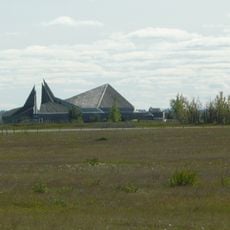
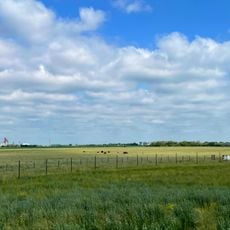
Redberry Lake Biosphere Reserve covers 112,200 hectares of rolling prairie in Saskatchewan, with seasonal ponds, marshes and aspen groves. Its core is Redberry Lake, a saline kettle-hole lake with a flat central bottom and several rocky islands; water is shallowest in the south-west, south-east and north-east and around the islands. Small patches of native mixed prairie survive among the grazed and cultivated land.
Redberry Lake was designated a UNESCO Biosphere Reserve in 2000, covering 112,200 hectares of the Saskatchewan prairie. In 2019 the designation was expanded into a biosphere region of close to 700,000 hectares, taking in the Redberry Lake watershed and surrounding land. The reserve is administered by the Redberry Regional Economic Development Authority Corporation together with the Rural Municipalities of Redberry, Douglas, Meeting Lake and Great Bend, the Lucky Man First Nations Reserve, and the town of Hafford.
The reserve's population mixes Plains Cree from the Lucky Man First Nations Reserve with Ukrainian, Mennonite, Doukhobor and other European settlers. Farming and livestock raising remain the main economic activities, and ecotourism has grown alongside them. The reserve is administered jointly by the Redberry Regional Economic Development Authority Corporation, the rural municipalities of Redberry, Douglas, Meeting Lake and Great Bend, and the town of Hafford.
The reserve is administered by the Redberry Regional Economic Development Authority Corporation together with the Rural Municipalities of Redberry, Douglas, Meeting Lake and Great Bend, the Lucky Man First Nations Reserve, and Hafford. Access is by road from Hafford, and the protected status keeps tourism out of fragile nesting areas. The core area covers 5,600 hectares of the saline lake and its islands, with a 6,300-hectare buffer zone around it.
The saline lake system with its islands serves as a critical nesting ground for American white pelicans, birds you may observe here. These islands provide safe breeding space that makes this location especially important for protecting migratory bird populations.
The community of curious travelers
AroundUs brings together thousands of curated places, local tips, and hidden gems, enriched daily by 93,892 contributors worldwide.