Kykkos Monastery, Orthodox monastery in Troodos Mountains, Cyprus
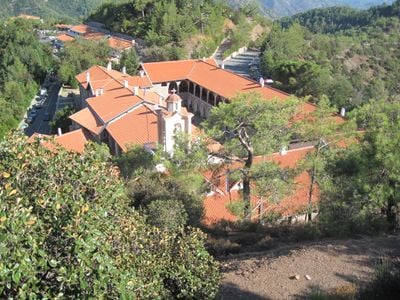
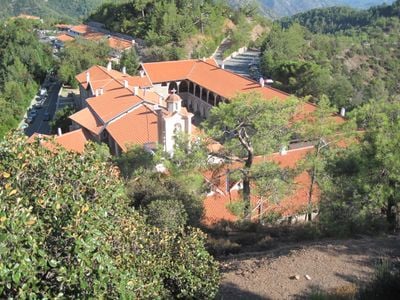
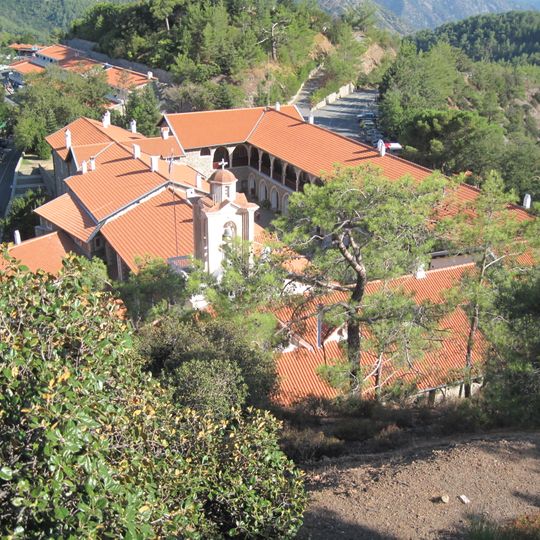
Kykkos is an Orthodox monastery in the Troodos Mountains of Cyprus, rising at 1183 meters above a forested mountain slope. The central church displays white stone walls and red tile roofs, surrounded by multi-story monastic buildings that enclose a large paved courtyard with arcaded walkways.
Founded around the end of the 11th century by Byzantine emperor Alexios I Komnenos, the monastery was built to house the icon of the Virgin painted by the Apostle Luke, brought from Constantinople. Fires destroyed it in 1365 and 1541; the church was rebuilt in stone and enlarged to three aisles in 1745. The bell tower followed in 1882, after Ottoman restrictions on bells were lifted.
The monastery's symbol is a bee, standing for diligence and purity. The Kykkos icon, said to be painted by the Apostle Luke, is kept half-covered by a gold-stitched curtain; tradition holds that whoever looks at it will be blinded. The last person to see it was Patriarch Gerasimos of Alexandria in 1669. To the right of the icon are a bronze arm and a swordfish saw, left as reminders of a curse and of sailors' gratitude.
Visitors should wear long trousers and covered shoulders and can borrow wraps at the entrance gate if they arrive underdressed. Certain areas remain reserved for monks, but the courtyard and main church are open to the public.
Archbishop Makarios III, the first president of Cyprus, entered this monastery as a novice in 1926 and began his religious path here. His tomb now lies just a few kilometers away on a nearby hill, where many visitors stop after their monastery visit.
The community of curious travelers
AroundUs brings together thousands of curated places, local tips, and hidden gems, enriched daily by 93,789 contributors worldwide.