Panagia tou Sinti Monastery, Orthodox monastery in Paphos district, Cyprus
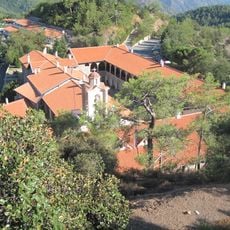
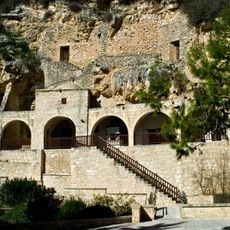
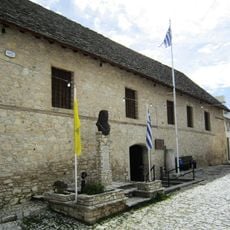
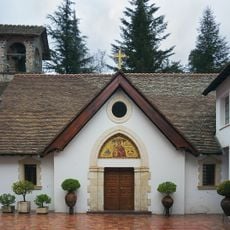
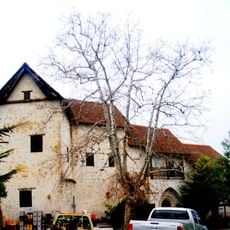
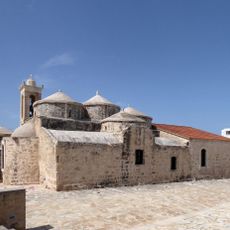
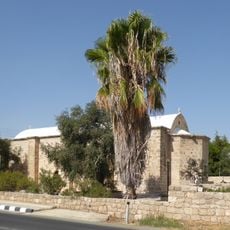
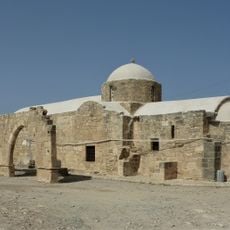
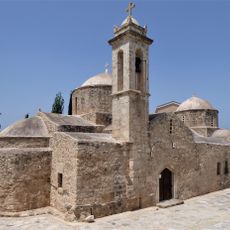
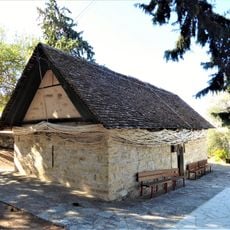
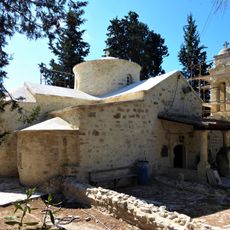
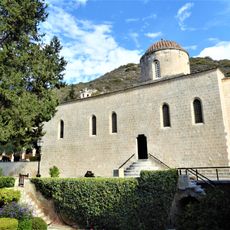
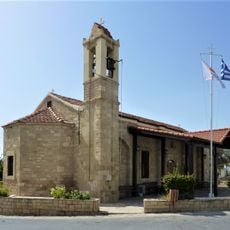
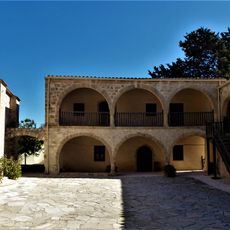
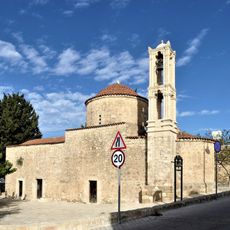
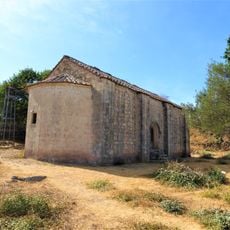
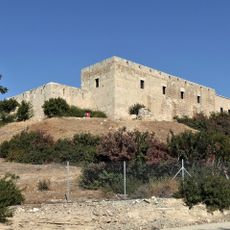
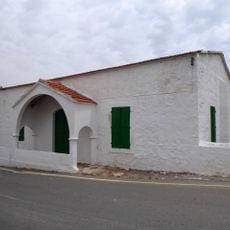
Panagia tou Sinti Monastery is an Orthodox monastery in the Paphos region displaying traditional Byzantine architecture with stone construction set against the Troodos mountain backdrop. The compound consists of several connected structures arranged around a central courtyard that house chapels, living quarters, and storage spaces.
Founded in the 13th century and consecrated to the Panagia Eleousa, the monastery was first held by the Franciscans, who farmed and produced olive oil. It was substantially rebuilt around 1542 under Venetian rule; after the Ottoman conquest of 1571 it was confiscated and later passed to Kykkos Monastery. It remained active until 1927, was declared an ancient monument in 1966, and received the Europa Nostra award in 1997.
The monastery is no longer a working community: it was abandoned in 1927 and is now a metochion (dependency) of Kykkos Monastery. Its 16th-century icon of the Panagia Eleousa was moved to Kykkos in 1956, and a copy stands in the church, where Orthodox services, baptisms and weddings are still held periodically.
Visitors should wear appropriate clothing as this is an active place of worship and maintain a respectful and quiet demeanor. The monastery is located in hilly terrain, so sturdy footwear and water are recommended, especially during warmer days.
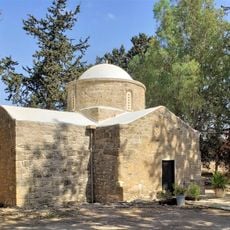
The church dome rests on four walls without any columns, a mix of Byzantine and Gothic elements that the pilgrim Vasily Grigorovich-Barsky described in 1735 as showing Western, Franciscan influence. Its famous 16th-century Eleousa icon was moved to Kykkos Monastery in 1956; a copy stands in the church today.
The community of curious travelers
AroundUs brings together thousands of curated places, local tips, and hidden gems, enriched daily by 93,442 contributors worldwide.