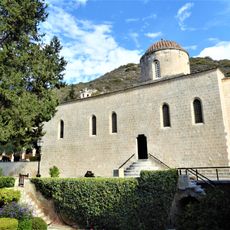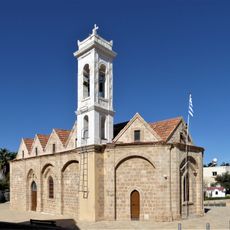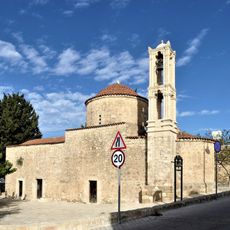
Agios Neophytos Monastery, Byzantine monastery in Paphos, Cyprus.
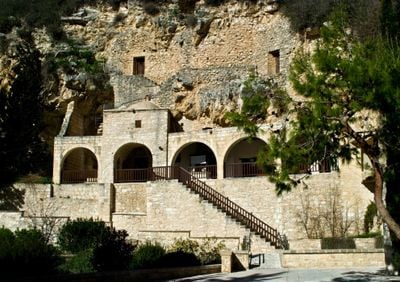
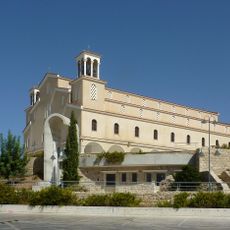
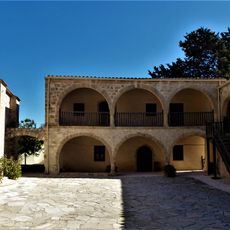
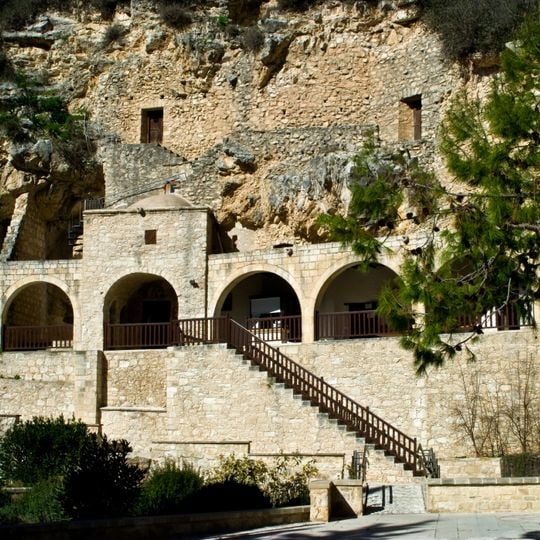
Agios Neophytos Monastery stands on a hillside near Tala, 15 km north of Paphos, at 412 m above sea level. Its lower facade is pale ashlar masonry with three arches — one rounded on the left, two pointed on the right — each opening onto a balcony with a dark metal railing. Above the left arch sits a small rectangular window, a metal-railed staircase climbs the right side, and the upper level is rough natural rock pierced by two dark rectangular openings.
The site began in 1159 when a monk carved a cave into the mountainside as a personal refuge, which then developed into a formal monastery within a decade. This early cave dwelling gradually expanded into the religious complex visitors see today.
The monastery's patron saint is honoured on 28 September, when pilgrims gather at the site. The cave frescoes were painted during Neophytos's own lifetime, in 1183 and 1196, and part of them was restored in 1503. The museum in the eastern wing holds icons from the 12th to 19th centuries, gospels and manuscripts, including Neophytos's own writings.
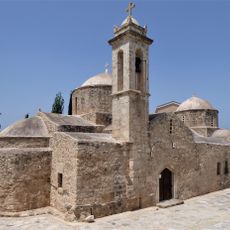
The monastery stands at 412 m above sea level, 10 km north of Paphos near Tala, with the cave hermitage cut into the rock above the main church. Paths between the Engleistra, the 16th-century church and the museum in the east wing involve steps and uneven stone; sturdy shoes help. The monastery is busiest on 28 September, the feast of Saint Neophytos.
Neophytos dug his own grave in the rock and left orders that it was not to be touched until the Last Judgement. He died in 1224, aged 90, after more than 60 years in his cell; his relics were found in 1756 and moved to the main church.
The community of curious travelers
AroundUs brings together thousands of curated places, local tips, and hidden gems, enriched daily by 94,303 contributors worldwide.