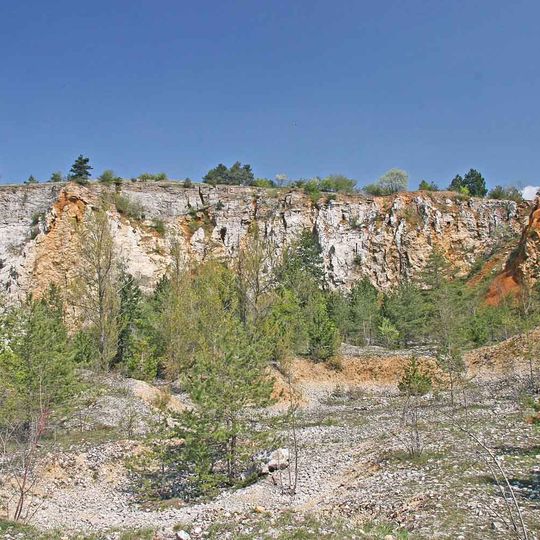
Koněprusy Caves, Limestone cave system in Central Bohemia, Czech Republic.
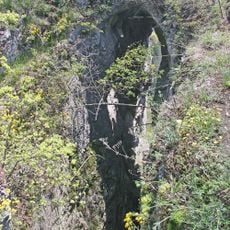
Koněprusy Caves is a limestone cave system extending through three levels and reaching depths of 70 meters beneath Zlatý kůň Hill. The overall system spans about 2 kilometers, with approximately 620 meters open to visitors.
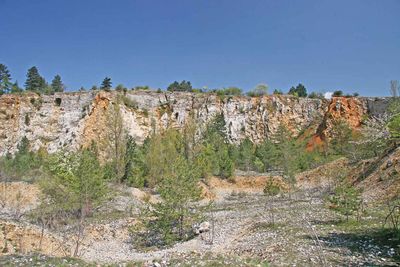
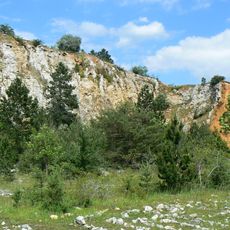
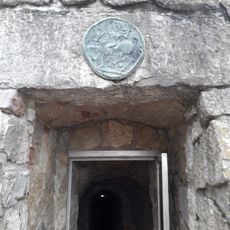
The cave system was discovered by chance in 1950 during a blast in the Houba quarry on the slope of Zlatý kůň hill, when the explosion opened the middle level. The upper level, called the Mint, had already been used between about 1460 and 1470 by forgers striking Hussite coins from copper plated with silver amalgam. The caves were made accessible to visitors in 1959.
On the upper level, in a chamber now called the Mint, forgers struck Hussite coins bearing the Czech lion between about 1460 and 1470. The coins were copper thinly plated with silver amalgam rather than solid silver. The workshop's remains were found there, and the tour route ends by climbing a spiral staircase into this upper level.
The temperature inside remains constant at about 10.5°C year-round, so warm clothing is advisable. Guided tours last about one hour and lead through the accessible section.
The Koněprusy Roses are opal-bearing formations that grew where dissolved calcium carbonate precipitated on the walls of an underground lake. In February 2007 a new passage was found in Petrbok Cave, named after speleologist J. Petrbok, containing the bones of a cave bear about 800,000 years old.
The community of curious travelers
AroundUs brings together thousands of curated places, local tips, and hidden gems, enriched daily by 94,294 contributors worldwide.