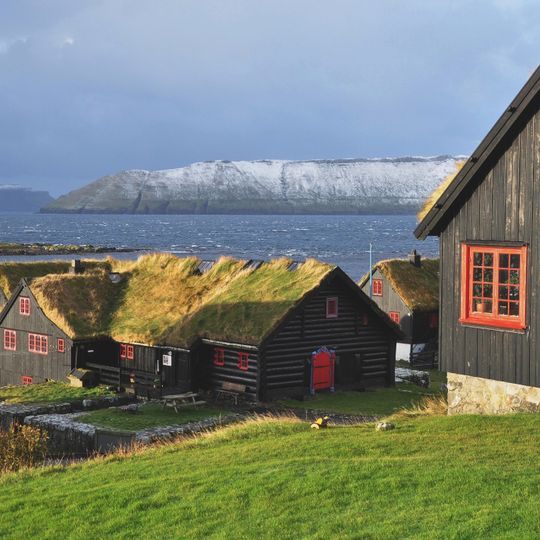
Kirkjubøargarður, Medieval farmhouse in Kirkjubøur, Faroe Islands.
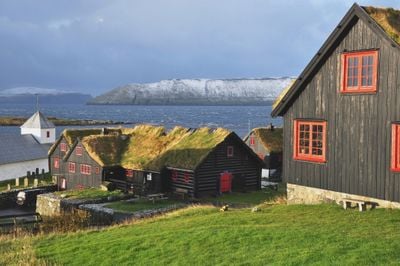
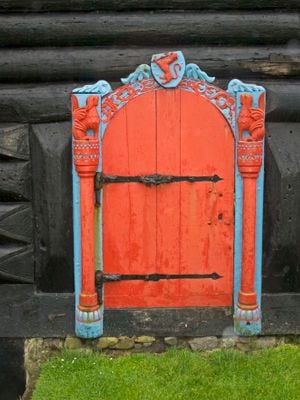
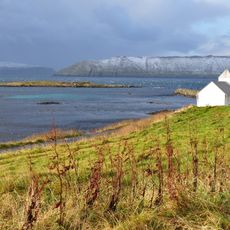
Kirkjubøargarður is a long single-storey farmhouse with dark, almost black horizontal wooden siding and a roof covered entirely in grass. A central front-facing gable and a lower left wing both have red-framed windows, and the building rests on a low stone foundation at the edge of a grassy slope, with water behind it. Its oldest rooms are the roykstova and loftstovan; the stórastovan was added in 1772.
The farm served as the bishop's residence and training center for the Diocese of the Faroe Islands from around 1100 until the Reformation in the mid-1500s. After that period, it became a private home and has remained in the same family ever since.
The Patursson family continues to shape daily life here through traditional practices passed down over many generations. The farm demonstrates how people in this place have long been tied to the land and their animals.
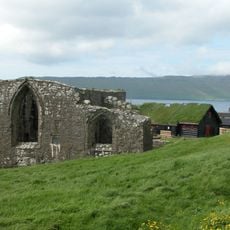
The location sits in a small village and is best explored on foot while taking in the view of traditional Faroese houses around you. It is worth allowing time to see both the historic rooms and the working areas of the farm in operation.
The roykstova, the oldest room, does not fit its foundation, so it may have been moved here from elsewhere. Its smoke hole in the roof is now closed with a window, and centuries of smoke have soaked into the inner walls. The Viking metal band Týr filmed the drinking scene of its video Hail To The Hammer here in 2003.
The community of curious travelers
AroundUs brings together thousands of curated places, local tips, and hidden gems, enriched daily by 92,787 contributors worldwide.