Lake Toba, Volcanic crater lake in North Sumatra, Indonesia.
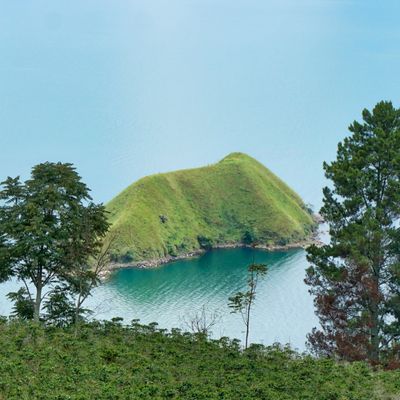
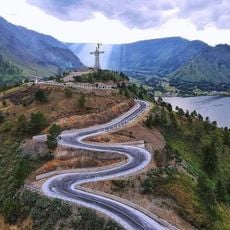
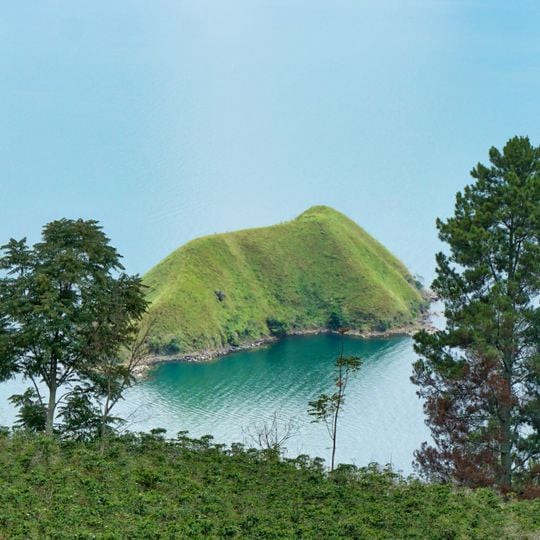
Lake Toba is a caldera lake in North Sumatra, about 100 kilometres long, 30 kilometres wide and up to 505 metres deep, with a surface at roughly 900 metres. Samosir, a resurgent-dome island in the centre, is joined to the caldera's two half-domes by a narrow graben. The northwestern Tandukbenua cone carries only sparse vegetation.
The caldera formed in the Toba eruption about 73,700 years ago, the largest known explosive eruption of the Quaternary, which released at least 2,800 km³ of material and left ash up to 6 m thick in central India. The collapse filled with water, and the resurgent dome became Samosir Island. The caldera was recognised as a UNESCO Global Geopark in July 2020.
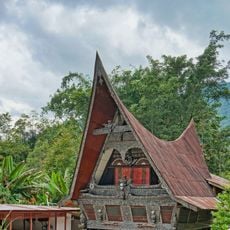
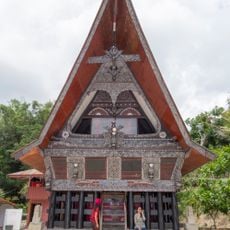
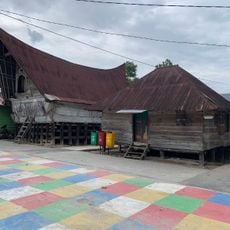
Batak communities perform their dances, songs and weaving of Ulos cloths daily for weddings and funerals around the water. Traditional wooden houses with curved roofs shaped like buffalo horns still stand in villages along the shore and remain actively inhabited.
Travelers reach the shores through Silangit airport or by ferries that run from Parapat to the island in the middle several times a day. Lodging options exist both along the coast and on the central island, with smaller villages offering quieter stays.
Samosir, the island in the lake, is itself a resurgent dome formed after the caldera collapse, and it holds a small lake of its own, Lake Sidihoni. The magma reservoir beneath it appears as stacked sills, described as "magma pancakes", 7 to 30 kilometres down.
The community of curious travelers
AroundUs brings together thousands of curated places, local tips, and hidden gems, enriched daily by 92,128 contributors worldwide.