Cashtal yn Ard, Neolithic chambered tomb in Cornaa, Maughold, Isle of Man
Cashtal yn Ard is a Neolithic chambered tomb at Cornaa, in the parish of Maughold, Isle of Man. It runs 39 m west to east: a restored open forecourt 6.7 m by 5.8 m, whose largest stone stands 2.3 m high, leads to five stone chambers separated by upright slabs. The chambers, averaging 1.2 m wide, step down in height from 1 m toward the east.
Cashtal yn Ard was built around 2000 BC, in the late Neolithic, and was probably started as a single burial chamber that was enlarged as further community members died. The cairn was first described in the early 19th century while still mostly intact, but by the mid-19th century its slabs had been taken for building nearby houses. H. J. Fleure and G. J. H. Neely excavated the chambers in the 1930s, finding flints, Neolithic pottery shards and at least 125 white sea pebbles; the site was excavated again in 1999.
The Manx name means "Castle of the Heights", after the site's elevation; an earlier name, Cashtal y Mucklagh y Vagileragh ("Castle of the Field Pigsty"), may record that the forecourt was later used to raise pigs. The tomb was also once called Ballachrink Cairn.
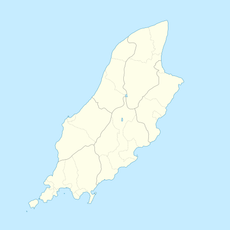
Cashtal yn Ard stands on a low hill in Cornaa, in the parish of Maughold in the north-east of the Isle of Man, not on the east coast. The forecourt and five chambers lie in open ground reached by a short walk from nearby lanes; wear sturdy footwear and weatherproof clothing, as the hilltop is exposed.
Excavations by Fleure and Neely in the 1930s found at least 125 white sea pebbles in the chambers, a type of deposit recorded at many Manx archaeological sites. No bones came from that dig, but Llewellynn Jewitt reported in 1885 a skull, jawbone with sound teeth and urn fragments found earlier at the site.
The community of curious travelers
AroundUs brings together thousands of curated places, local tips, and hidden gems, enriched daily by 94,514 contributors worldwide.