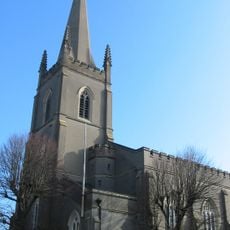
La Hougue Bie, Neolithic passage grave with medieval chapels in Grouville, Jersey.
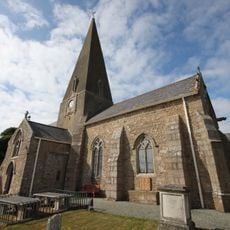
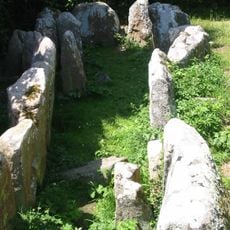
La Hougue Bie is a passage grave in Grouville: a 20.4-metre stone passage and chamber covered by a 12.2-metre earth mound faced with stacked grey and brown stones. Two medieval chapels stand on top, the 12th-century Notre Dame de la Clarté and the Jerusalem Chapel added around 1520. A flat-topped stone resting on an upright stone forms a small opening at the foot of the mound.
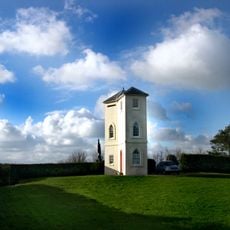
The passage grave was built between 3100 and 2600 BC and used for ceremonial purposes, with burials incidental; it was abandoned before the Late Neolithic. In the 12th century the chapel Notre Dame de la Clarté was built on the mound, and the Jerusalem Chapel was added in 1520. Philippe d'Auvergne began the Prince's Tower in 1792, demolished in 1924; the site was excavated in 1925 by the Société Jersiaise.
The site shows how religious beliefs changed over time, with two medieval chapels built atop the ancient mound representing Christianity's arrival on the island. Visitors can see how different communities used the same sacred location across thousands of years.
The passage is low and narrow, so you walk bent over on uneven gravel between rough stone walls. The mound top is reached by a path, and the chapels and the German bunker exhibition sit up there. The site is managed by Jersey Heritage and lies between the ferry ports of Gorey and Saint Helier.
La Hougue Bie appears on Jersey's 2010 one-pound note. The equinox alignment of the passage, noted only after the 1925 excavation and restoration of the original entrance, is described in the sources as probably fortuitous rather than a sign of deliberate astronomical design.
The community of curious travelers
AroundUs brings together thousands of curated places, local tips, and hidden gems, enriched daily by 92,963 contributors worldwide.