Hohes Haus Liechtenstein, Parliament building in Vaduz, Liechtenstein
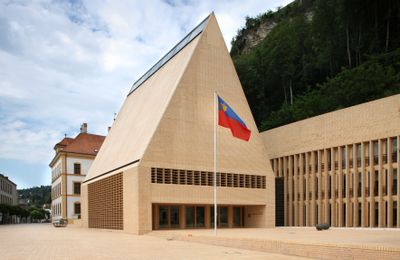
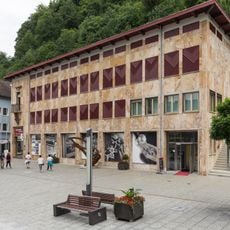
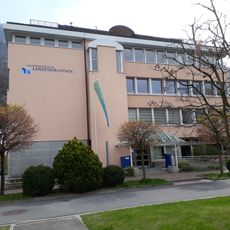
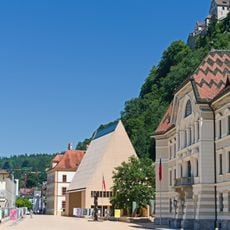
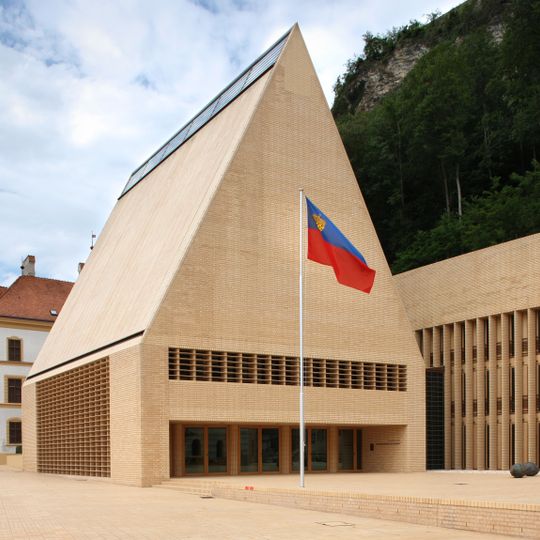
The Hohes Haus Liechtenstein is the Landtag building at Peter-Kaiser-Platz in central Vaduz, opened on 15 February 2008 and designed by German architect Hansjörg Göritz. It consists of three parts: the Hohes Haus, a tall structure with a pointed roof housing the 19-metre-high plenary hall; the glazed Verbindendes Haus linking it to the two-storey Langes Haus, which holds offices, meeting rooms, a library, archive and cafeteria. About one million clinker bricks, 600 tonnes of steel and 5,800 cubic metres of concrete went into the complex.
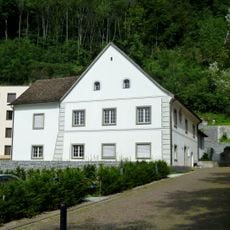
The Landtag, created by the 1818 constitution, met first in the Landvogtei (later Verweserhaus), then from 1862 in the Gasthaus Kirchthaler. Its first own building, the Ständehaus, was erected in 1866/1867 and used from 1868 until 1905, when sessions moved to the government building. In 1998 the Landtag approved 36 million CHF for a new building; Hansjörg Göritz won the competition, construction ran from 2002 to 2008, and the first session was held on 21 February 2008.
The building's name comes from its three parts: the tall Hohes Haus with the plenary hall, the glazed Verbindendes Haus linking it to the two-storey Langes Haus. On state visits a blue carpet is laid in the main entrance hall, while the neighbouring government building uses a red one. The Langes Haus holds the parliamentary archive, a library and a cafeteria.
The building sits at Peter-Kaiser-Platz in central Vaduz and is easy to locate. Keep in mind that access to parts of the interior requires permission, so it helps to check visitor conditions in advance before planning your visit.
The chamber features an unusual circular seating arrangement where all representatives sit around a single central table. This layout differs markedly from the hierarchical seating patterns found in most other European parliaments.
The community of curious travelers
AroundUs brings together thousands of curated places, local tips, and hidden gems, enriched daily by 92,917 contributors worldwide.