Prehistoric pile dwellings around the Alps, Archaeological site at Alpine lakes and wetlands in Switzerland, Italy, Germany, France, Austria, and Slovenia.
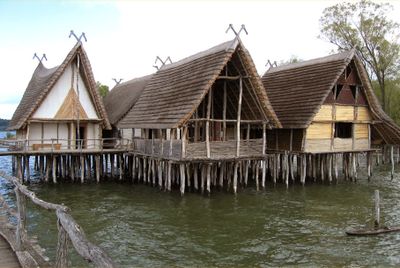
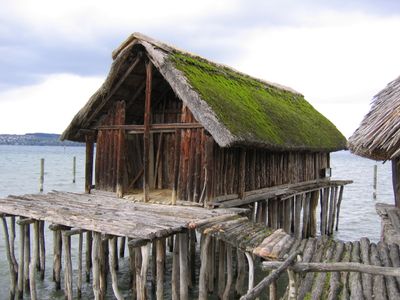
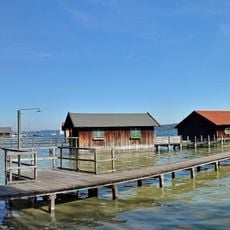
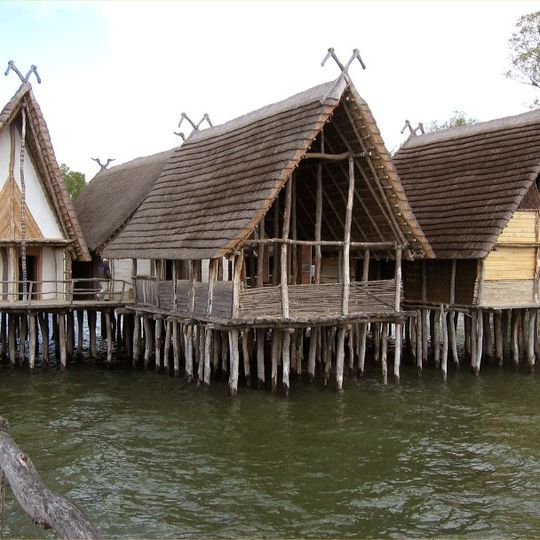
The prehistoric pile dwellings around the Alps are 111 archaeological sites in Switzerland, Italy, Germany, France, Austria and Slovenia, listed by UNESCO in 2011. The remains lie on lake and river shores, in wetlands or under water. Reconstructions such as those in the photographs show timber houses on piles with shingled roofs and plank walls, reached by wooden walkways.
These settlements developed between 5000 and 500 BCE, when early farmers established themselves at the lakes and built their homes on wooden posts. Proximity to water offered protection from danger, enabled fishing, and provided access to fertile soil in the valley lowlands.
The 111 sites were inscribed on the UNESCO World Heritage list on 27 June 2011, with the official ceremony held on 10 September 2011 in Neuchâtel, Switzerland, which led the nomination. Since 2022 a bronze relief in front of the town hall in Konstanz-Litzelstetten shows the positions of all 111 sites as pins that can be seen and felt. In Slovenia these were the first World Heritage Sites listed for cultural value.
The sites are distributed across six countries, so advance planning helps you choose a region to visit that suits your travel route. Many museums near the lakes display findings and explain excavations, while some locations feature reconstructions of the ancient dwellings.
The wet underwater environment has preserved organic materials like wood, textiles, and plant remains in exceptional condition, something rarely found elsewhere. These findings allow researchers to understand exact details about ancient craftsmanship and eating habits, as if looking directly into the daily life of the past.
The community of curious travelers
AroundUs brings together thousands of curated places, local tips, and hidden gems, enriched daily by 92,625 contributors worldwide.