Rose Island, Archaeological heritage site in Lake Starnberg, Germany.
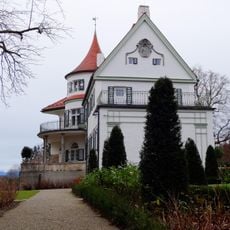
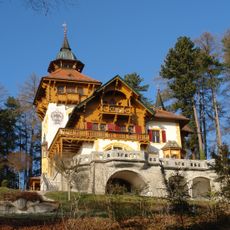
Rose Island is a small island in Lake Starnberg featuring a royal villa and formal gardens that are part of a UNESCO World Heritage Site. The layout includes a main building with outbuildings and circular rose gardens positioned in front of the villa.
Settled since the Neolithic, the island was a Bronze Age centre where a 13.46 m dugout canoe was found; a Carolingian tuff church followed in the 7th century. In 1850 Maximilian II bought it from the Kugelmiller fishing family and had the Casino villa built by Eduard Riedel in 1853, with gardens by Peter Joseph Lenné. Ludwig II later received Wagner and Empress Elisabeth there.
The island was called Wörth until the mid-19th century; the present name comes from the oval rosarium with hundreds of tall standard roses that King Maximilian II laid out around the Casino. In its centre stands a five-metre white-and-blue glass column with a figure of a girl holding a parrot, a gift from King Friedrich Wilhelm IV of Prussia to Marie of Prussia and her husband Maximilian II.
The island is only accessible by ferry, which runs during specific seasons and has limited times of operation. Visitors should check ahead since crossings are not offered every day.
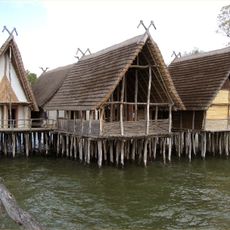
Beneath the water of the lake lie settlement remains from around 5000 years ago, revealing much about early human habitation. These submerged traces make the island a window into prehistoric life.
The community of curious travelers
AroundUs brings together thousands of curated places, local tips, and hidden gems, enriched daily by 93,121 contributors worldwide.