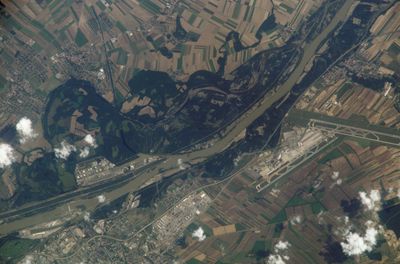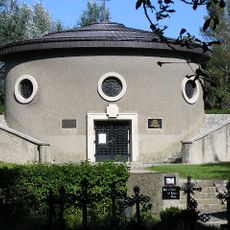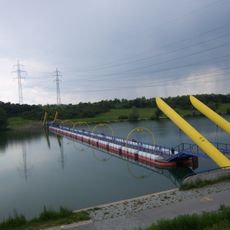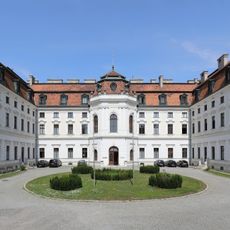
Lobau, Biosphere reserve in Donau-Auen National Park, Vienna, Austria.
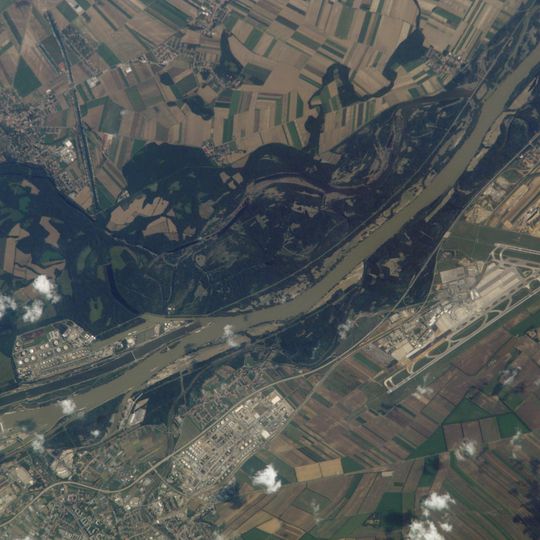
Lobau is a roughly 22-square-kilometre floodplain on the northern bank of the Danube in Vienna's 22nd district, Donaustadt, with a smaller part in Groß-Enzersdorf, Lower Austria. Dense forest is cut by winding channels and pale clearings, bounded by the river and farmland. The Danube-Oder Canal, begun in 1939, divides it into the Upper and Lower Lobau.
In the 19th century the Lobau served as the imperial court's hunting ground, where Crown Prince Rudolf often hunted; on 2 September 1903 Franz Joseph I and King Edward VII each shot a ten-point stag. It was declared a protected area in 1905, and in 1918 Charles I gave the Upper Lobau to Vienna. Since 1996 it has formed part of the Donau-Auen National Park.
The name Lobau is not derived from a Germanic word for forest; it refers to the floodplain on the northern bank of the Danube. In the 1920s naturism took hold along the old river arms, and naturist groups established meeting spots there that still exist. The Dechantlacke and Panozzalacke are used for swimming, and a nature trail called Obere Lobau runs from Saltenstraße to Dechantweg.
The area offers many marked walking and cycling trails through the floodplain, some of them on wooden boardwalks through wet zones. In summer there is a swimming spot at Dechantlacke in the upper section with shallow water and surrounding meadows for sunbathing.
The Heißländen are dry gravel banks within the wetland, where heat and dryness have created plant communities resembling savanna. This formation occurs in the edge zones, where the Danube rarely floods anymore and stones retain summer heat.
The community of curious travelers
AroundUs brings together thousands of curated places, local tips, and hidden gems, enriched daily by 93,067 contributors worldwide.