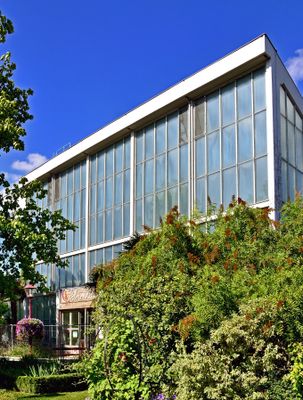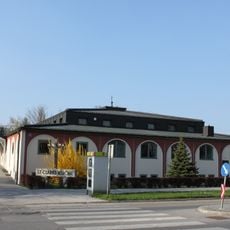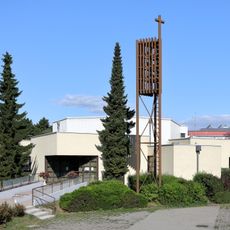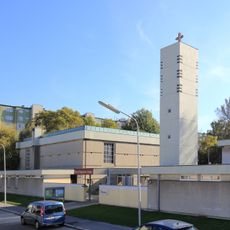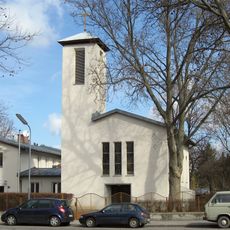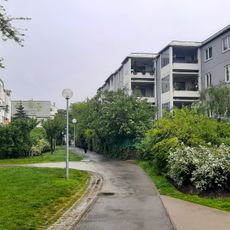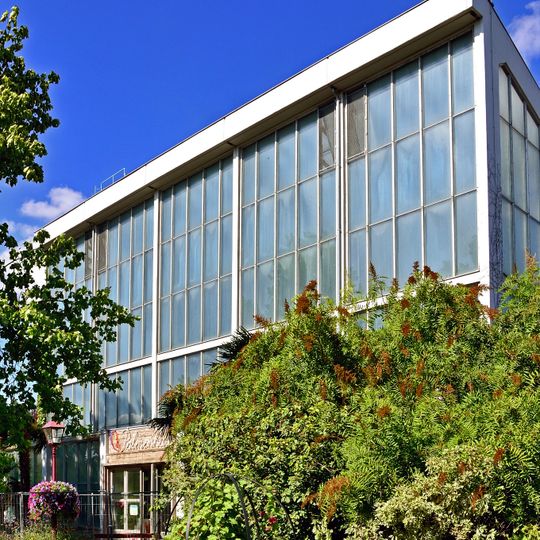
Greenhouses of Blumengärten Hirschstetten, Historical greenhouse in Donaustadt, Austria.
The Greenhouses of Blumengärten Hirschstetten are glass structures that shelter numerous plant species while maintaining controlled temperature and humidity levels year-round. The facility displays different cultivation techniques and allows visitors to observe tropical and Mediterranean plants up close.
The Hirschstetten greenhouses were built as Vienna's new municipal nursery after 1957, when the war-damaged Vorgartenstraße site and the fumes of the Engerthstraße power plant forced a move to Quadenstraße. The complex, then among Europe's most modern large municipal nurseries, covered 18 hectares with 24 cultivation houses, three glasshouses, three glasshouse blocks and a large palm house. In September 2002 the site was renamed Blumengärten Hirschstetten and opened to visitors.
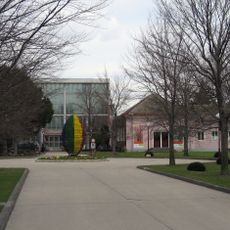
The Palmenhaus shelters potted plants used for municipal ceremonial events, wintering them off-season; its three connected sections cover 700 m² and are linked by passages wide enough for lorries. The surrounding Florarium holds themed gardens such as the Donaustädter Weinhügel, a Provence garden, a Chinese/TCM garden and a prehistoric garden, plus a hedge maze and a recreated farm with goats.
The greenhouses stand in the 60,000 m² Florarium, reached from Quadenstraße in Vienna's 22nd district, Donaustadt. The grounds open from mid-March to mid-October; the Palmenhaus stays open through the winter months. The Palmenhaus covers 700 m² in three climate zones, so allow time to walk between the themed gardens.
The Palmenhaus covers 700 m² in three connected sections, each presenting flora from a different climate zone, with a small amount of fauna as well. Its sections are linked by service corridors wide enough for lorries to drive through.
The community of curious travelers
AroundUs brings together thousands of curated places, local tips, and hidden gems, enriched daily by 93,677 contributors worldwide.