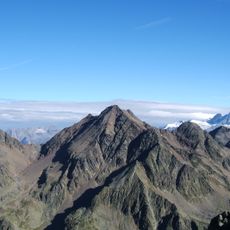
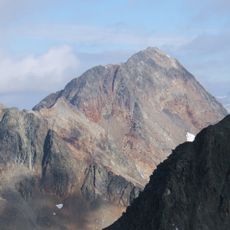
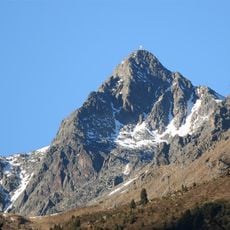
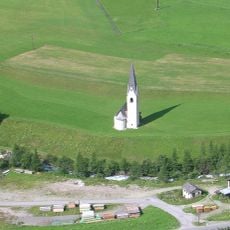
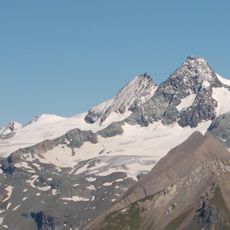
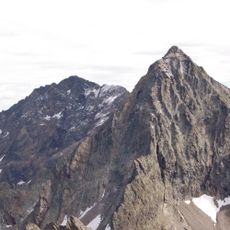
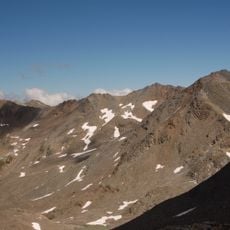
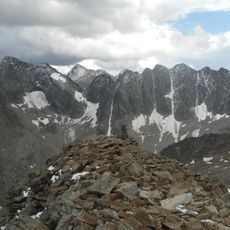
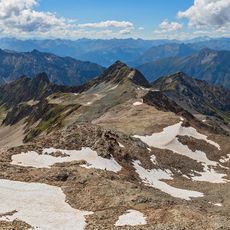
Böses Weibl, Mountain summit in Kals am Großglockner, Austria.
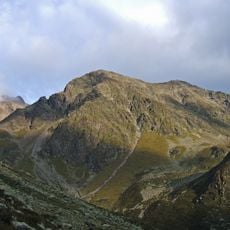
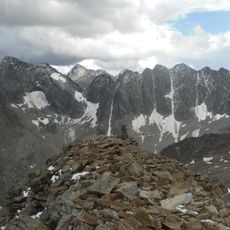
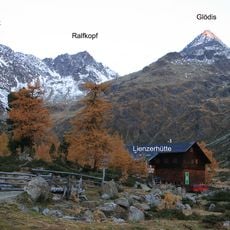
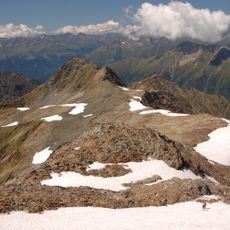
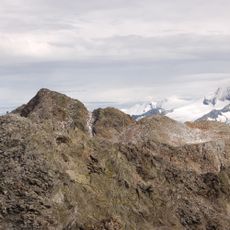
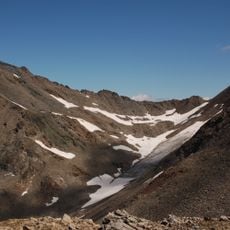
Böses Weibl is a 3,119-metre summit in the Schober Group of East Tyrol, north of the main ridge, with a cone-shaped top. It is one of the easier three-thousanders of the group, though at least 1,200 metres of ascent and descent must be covered. The summit gives a view of the Großglockner and, from east through south to west, of the Schober Group with Großes Hornkopf, Roter Knopf, Glödis, Ralfkopf, Ganot and Hochschober.
The sources record no climbing history for Böses Weibl, but its routes are documented in the Alpine Club map sheet 41 (1:25,000) and in Geord Zlöbl's 2005 survey of East Tyrol's 3,000-metre peaks in Hohe Tauern National Park. The normal ascent runs from the Lucknerhaus via the Peischlachtörl (2,490 m) and Tschadinsattel (2,987 m) to the west flank, gaining at least 1,200 metres of height.
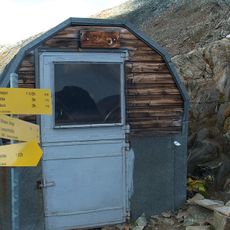
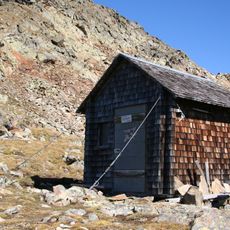
The name Böses Weibl means "evil woman" or "wicked wench" in the local dialect, a name type common among East Tyrolean peaks. The sources give no legend explaining it, so the origin of the name is not documented. The summit is climbed from the Lucknerhaus via the Peischlachtörl and Tschadinsattel, or from the Elberfelder Hütte via the Kesselkeessattel, where the Gernot-Röhr-Biwak stands.
Visitors should prepare for difficult climbing passages and bring appropriate equipment and experience, especially during the main climbing season from June to September. Anyone wanting to reach this summit needs solid skills in technical mountaineering.
The summit lies 1.5 km from Krystallspitze, and the panorama takes in the Großglockner to the north plus the Schober Group peaks from east to west: Großer Hornkopf, Roter Knopf, Glödis, Ralfkopf, Ganot and Hochschober. Average annual precipitation here is 2,138 mm.
The community of curious travelers
AroundUs brings together thousands of curated places, local tips, and hidden gems, enriched daily by 92,947 contributors worldwide.