Dreifaltigkeitskirche, Roman Catholic church in Favoriten, Vienna, Austria
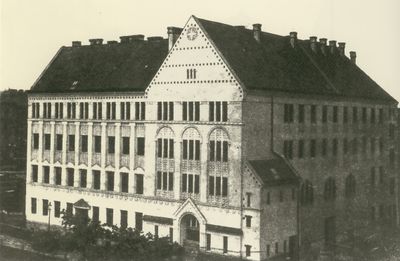
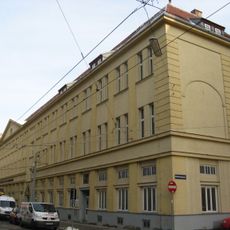
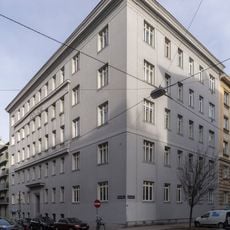
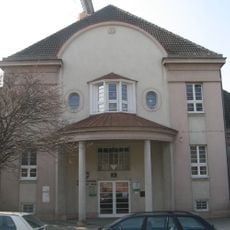
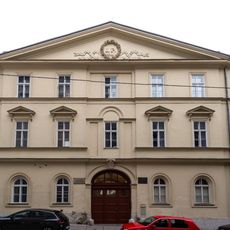
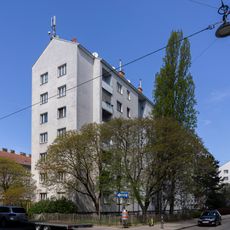
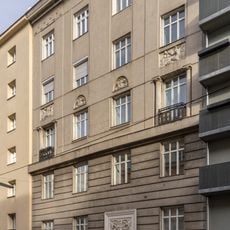
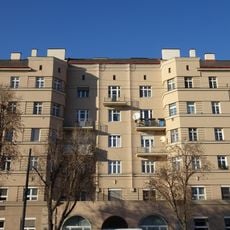
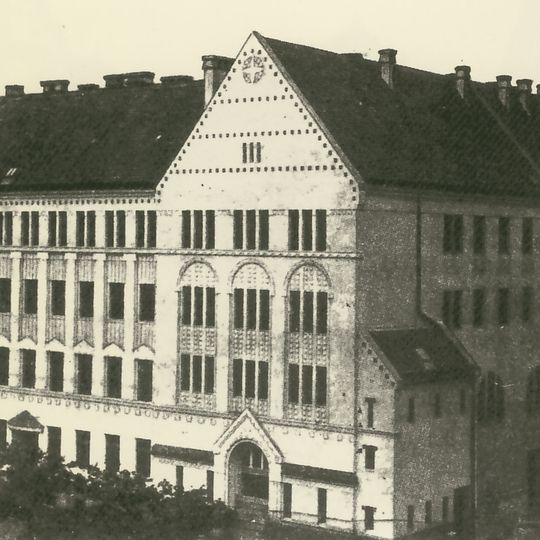
The Dreifaltigkeitskirche at Alxingergasse 6 is a hall church in late Heimatstil with stylised Neo-Romanesque forms, designed by Richard Jordan and built 1913–1914. It stands within a complex running from Alxingergasse 2 to 10 that also holds a former convent, parish centre, school, kindergarten and after-school care. The interior, remodelled under Hans Petermair from 1954 to 1959, is plain; Ernst Bauernfeind made the 1959 high-altar mosaic of the Gnadenstuhl.
The Dreifaltigkeitskirche was built from 1913 to 1914 to a design by Richard Jordan and was first consecrated to Saint Philomena. It became a parish church in 1942, and Hans Petermair led a remodelling of the interior from 1954 to 1959. In 1962 the dedication changed to the Holy Trinity, and since 2015 it has been a filial church of the parish Zum Göttlichen Wort.
The church was dedicated to Saint Philomena until 1962, when it received its current name, Holy Trinity. Mass is held every Sunday at 9:30. The parish runs a Le+O distribution point of the Caritas of the Archdiocese of Vienna, handing out food and free advice to people at risk of poverty.
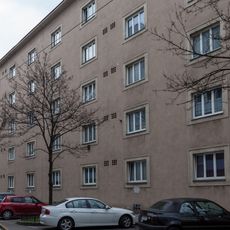
The church stands at Alxingergasse 6 in northern Favoriten, near Waldmüllerpark, within a complex running from Alxingergasse 2 to 10 that also holds the parish centre, school, kindergarten and after-school care. Mass is held Sundays at 9:30. The building belongs to the Institut Neulandschulen and has been a filial church of the parish Zum Göttlichen Wort since 2015.
The church's three bells were cast by the Favoritner bell foundry Pfundner and hung for Trinity Sunday 1962; they are dedicated to the Trinity, the Mother of God and Saint Anthony. The organ, built in 1979 by Gregor Hradetzky, has 13 stops on two manuals and pedal with mechanical action.
The community of curious travelers
AroundUs brings together thousands of curated places, local tips, and hidden gems, enriched daily by 94,030 contributors worldwide.