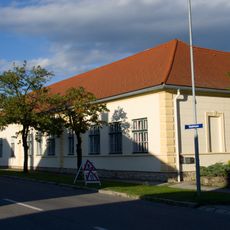
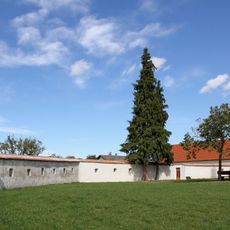
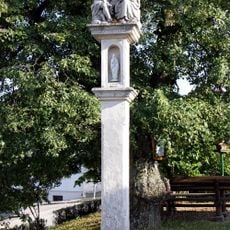
Helenenschacht, Historical mining tower in Ritzing, Austria
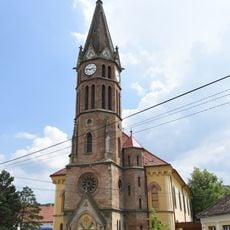
Helenenschacht is a brick-clad tower that served as the entrance to former coal mining operations in this Austrian region. The structure clearly shows its industrial purpose and marks the legacy of mining activity in the area.
The Helenenschacht shaft was sunk in 1882 and named after Helene Flandorfer, wife of mine operator Paul Flandorfer. From 1888 the Brennberger Kohlenbergbau-Actien-Gesellschaft ran the Ritzing and Brennberg mines together, employing about 820 workers around 1900. After a 1902 tunnel breakthrough to the Sopron shaft, the Helenenschacht was closed and only its haulage route kept open; its headframe was encased in brick around 1914/15 by Italian prisoners of war. The 1921 border split the two mines, and Austria recognised in 1928 that the Barbara-Helenenschacht operation stayed under Hungarian mining authority until 1963.
The settlement is called a Kolonie, a mining colony where some 60 miners' families lived around 1909. Its name comes from the Helenenschacht shaft, named after Helene Flandorfer (née Bauer) of the operating family. The shaft was sunk in 1882; its headframe was encased in brick by Italian prisoners around 1914/15.
The site is accessible through marked hiking trails that connect to larger path networks in the region. Weather and ground conditions should be considered when planning a visit, as trails can be muddy or difficult after rain.
The headframe was encased in brick around 1914/15 by Italian prisoners for safety reasons. After the total collapse of the Sopron shaft in 1918, the Helenenschacht gained renewed importance, and an aerial ropeway carried the coal mined here to the main works at Brennberg.
The community of curious travelers
AroundUs brings together thousands of curated places, local tips, and hidden gems, enriched daily by 94,321 contributors worldwide.