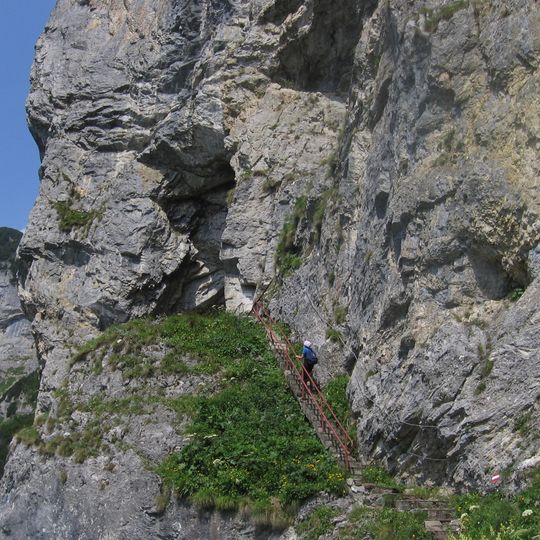
Frauenmauerhöhle, Natural cave system in Styria, Austria.
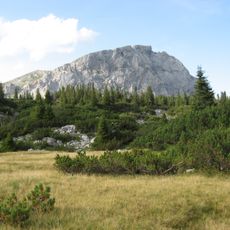
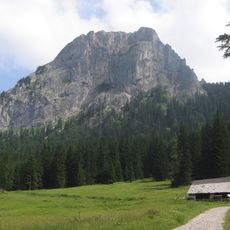
The Frauenmauerhöhle is a cave system located in the Hochschwab mountains that contains extensive underground passages and multiple chambers. The cave features various rock formations and ice deposits that have developed within its passages over time.
Eisenerz miners reached the Klamm, a narrow passage mid-cave, around 1820; only after they cleared large amounts of debris there could the cave be walked from end to end, serving as a shortcut between Eisenerz and Tragöß. In 1961 Sepp Illmaier discovered the link to the Langsteinhöhle, and by 1998 about 21 km of the system had been surveyed. In 2011 researchers proved a connection to the Langstein-Eishöhle.
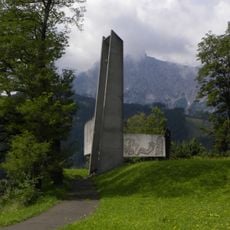
Three crosses inside the cave mark where three students died of hypothermia after their only light source burned out; they had tried to feel their way along a wall but circled a large pillar. A memorial plaque at the east portal recalls Empress Elisabeth's visit on 14 September 1885 with Archduchess Marie Valerie. The Illmaier-Platzl at the west portal is named after Sepp Illmaier, who in 1961 found the link to the Langsteinhöhle.
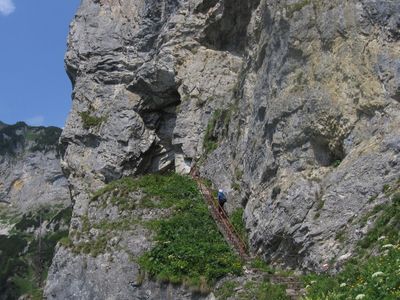
The cave is a through-trip of about 644 m between two entrances: the west entrance is reached from the Präbichl pass via the Leobner Hütte (4 h) or from the Gsollkurve of the B 115 (2 h), the east entrance from the end of the road from Tragöß toward Grüner See (Jassingau, about 3 h). As of 2026 no regular guided tours are offered, and entering the wide system without a local guide is not without danger.
The cave is a through-cave: its roughly west-east passage runs 644 m and lets walkers cross the massif between Eisenerz and Tragöß. In 1961 Sepp Illmaier of Eisenerz found the link to the Langsteinhöhle; the Illmaier-Platzl at the west portal is named after him. The system is among Austria's longest caves.
The community of curious travelers
AroundUs brings together thousands of curated places, local tips, and hidden gems, enriched daily by 94,458 contributors worldwide.