Sandling, Mountain summit in Styria, Austria.
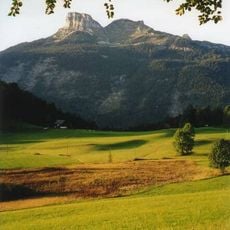
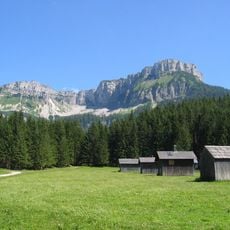
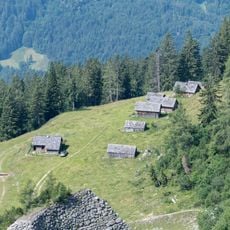
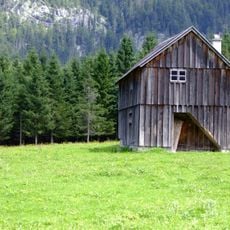
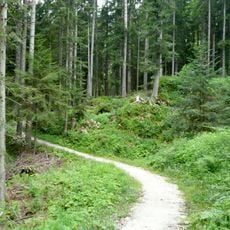
Sandling is a mountain summit in Styria standing at 1,717 meters and presents varied landscapes throughout the climb with forests, meadows, and rocky terrain. The ascent transitions between wooded slopes and open alpine grasslands that continue upward to the peak.
The mountain holds significant salt deposits that supported salt extraction in the region for centuries. These geological formations shaped the economic history of the surrounding area.
In Altaussee the mountain is often called "Soizbärig" (salt mountain) or "Bärig" (mountain), a name that recalls its economic role for the village. The salt works at Altaussee, supplied from the Sandling stock, produced 550,000 tonnes of salt in 2005, the largest output in Austria. Parts of the mine are open to visitors as a show mine.
The hiking route from Blaa Alm to the summit is about 10 kilometers and takes roughly 5 hours for the full circuit. Hikers should wear sturdy footwear and be prepared for changing weather conditions depending on the season.
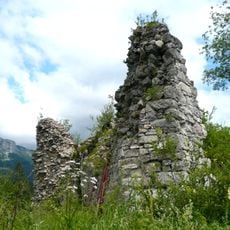
The German name "Soizbärig" (salt mountain) is still used in Altaussee for the Sandling, a reminder of the salt that shaped the village. On the night of 12 to 13 September 1920, the roughly 1,700-metre Sandlingturm on the west wall collapsed; over six million cubic metres of limestone buried parts of the Vordere Sandlingalm. The salt stock's plasticity keeps causing tension and fractures in the limestone above.
The community of curious travelers
AroundUs brings together thousands of curated places, local tips, and hidden gems, enriched daily by 92,618 contributors worldwide.