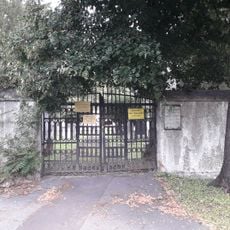
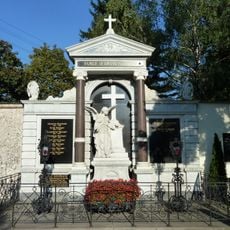
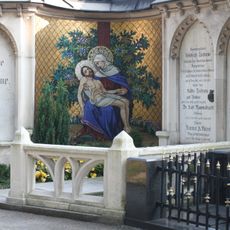
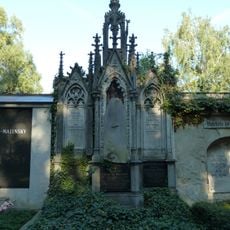
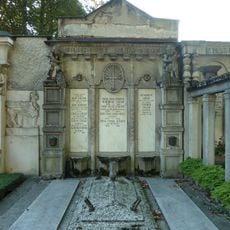
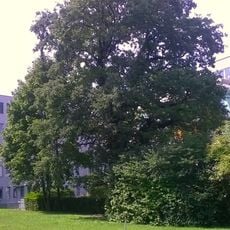
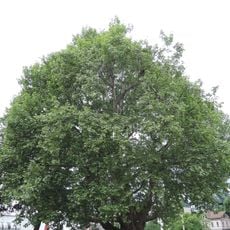
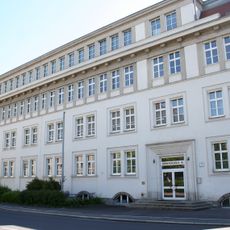
St. Barbara-Friedhof, Linz-Lustenau, Heritage cemetery in Linz, Austria.
St. Barbara-Friedhof covers about 12 hectares south of the Westbahn in Linz's Bulgariplatz district and holds roughly 20,000 graves. The busy Dinghoferstraße splits it into two halves, and beside the Catholic section lies a row of Jewish graves. Since 1860 about 180,000 people have been buried here, and the cemetery is open to all faiths and to none.
A parish cemetery existed around the Linz Stadtpfarrkirche by 1286; it was moved in 1531 near today's Landstraße/Betlehemstraße and again in the late 16th century near today's Friedensplatz, where a chapel dedicated to St. Barbara was built in 1658. Emperor Joseph II's decree moved burials outside the city, so this cemetery was closed in 1786 and the present site was bought as its replacement. During the Nazi period, victims of the euthanasia killings at the Niedernhart psychiatric institution were buried here.
The cemetery is named after a chapel dedicated to Saint Barbara that stood in the old parish cemetery near today's Friedensplatz. Since 1860 about 180,000 people have been buried here, and for some time the grounds have been open to people of all faiths or none. A separate section holds Jewish graves.
The cemetery lies south of the Westbahn in the Bulgariplatz district, and the busy Dinghoferstraße splits it into two halves, so visitors cross between sections via the road. The grounds cover about 12 hectares; the entrance to the cemetery road features a 1985 sgraffito titled Werden und Vergehen by Hans Hoffmann-Ybbs, protected as a monument.
The cemetery holds a communal grave of eight murdered policemen killed in 1945, and the graves of writer Adalbert Stifter and his wife Amalie. The entrance to Friedhofstraße carries a 1985 sgraffito titled Werden und Vergehen by Hans Hoffmann-Ybbs, a listed monument.
The community of curious travelers
AroundUs brings together thousands of curated places, local tips, and hidden gems, enriched daily by 93,018 contributors worldwide.