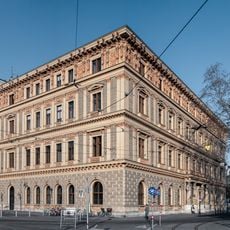
Münzkabinett, Numismatic collection at Kunsthistorisches Museum, Vienna, Austria
The Münzkabinett is a numismatic collection at the Kunsthistorisches Museum with over 600,000 objects spanning three millennia. The pieces include coins, medals, banknotes, stocks, and minting tools displayed across three separate halls.
The collection originates from the Habsburg imperial collection, with the oldest preserved inventory dating to 1547 under Ferdinand I. It has been expanded continuously since then and became one of Europe's most significant numismatic collections.
The second hall shows how money has changed over time, from natural forms of exchange through the invention of coins to modern payment methods. Visitors can see here how different cultures and periods developed their own ways to store and exchange value.
The collection is located on the second floor of the Kunsthistorisches Museum and can be accessed through an interactive online catalog. Visitors should allow time to explore the three halls and can research exhibits online before their visit.
The oldest surviving inventory, drawn up around 1547 under Ferdinand I by chamberlain Leopold Heyperger, lists 1,567 coins, almost all Roman. Ferdinand II's coin cabinets from the 16th century still exist and are kept today in the Münzkabinett and at Ambras Castle.
The community of curious travelers
AroundUs brings together thousands of curated places, local tips, and hidden gems, enriched daily by 92,868 contributors worldwide.