Hexenturm, Medieval tower in Schallmoos district, Salzburg, Austria
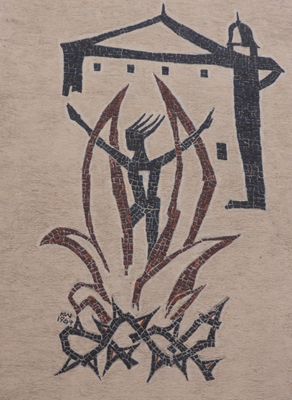
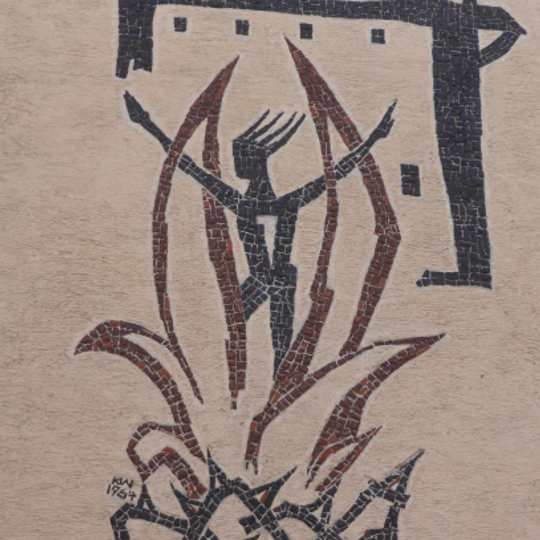
The Hexenturm was a slightly oval tower, about 15 by 14 metres in plan, with walls 2 to 2.5 metres thick and a height of roughly 14 metres. It stood at the northeastern corner of the city wall between the Bergstraßentor and the outer Ostertor, pierced only by loopholes and reached by wooden stairs. A mosaic at Paris-Lodron-Straße 16, inscribed "KM 1964", marks the site.
Built between 1465 and 1480 under Archbishop Bernhard von Rohr as the northeast corner tower of Salzburg's second city wall, the Hexenturm later held 14 prison cells set up in July 1678 for accused witches. It lost its defensive role under Paris Lodron, served as a lumber store from 1821, and was destroyed by bombs in 1944; a residential building replaced it around 1965.
The tower's name comes from its use as a prison: in July 1678 the court council had 14 cells for accused prisoners and a jailer's flat installed here because other jails were overcrowded. Around a year later it held people charged with witchcraft in the trials under Archbishop Max Gandolf von Kuenburg. The wall mosaic at Paris-Lodron-Straße 16, marked "KM 1964", shows a figure with outstretched arms between flame-like shapes.
The original tower no longer exists, destroyed in 1944 and replaced by a modern residential building. To understand the site's history, visitors can explore the Hohensalzburg Fortress Museum, which preserves artifacts from this era.
The tower's weather vane was a life-size sheet-metal figure of a witch riding a broom, mounted on the spire. It was long displayed in the Burgmuseum on Hohensalzburg Fortress but was stolen from there; it is not in the museum today. The mosaic at Paris-Lodron-Straße 16/Wolf-Dietrich-Straße 19, signed "KM 1964", marks the site.
The community of curious travelers
AroundUs brings together thousands of curated places, local tips, and hidden gems, enriched daily by 93,554 contributors worldwide.