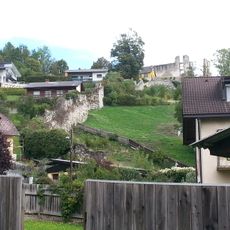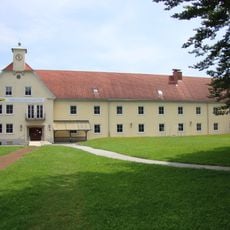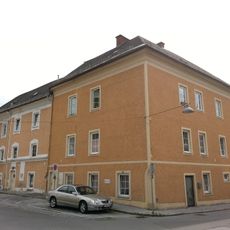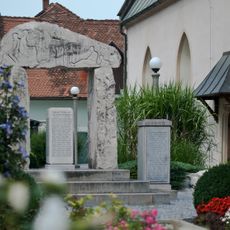
Burg Neu-Leonroth, Castle ruin in Sankt Martin am Wöllmißberg (98717)
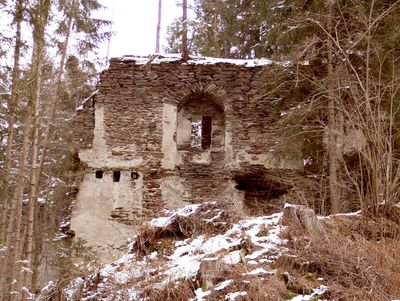
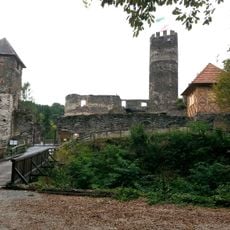
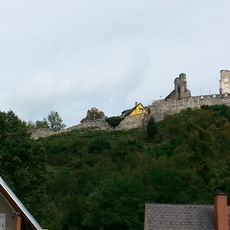
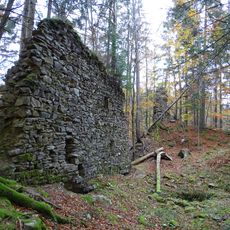
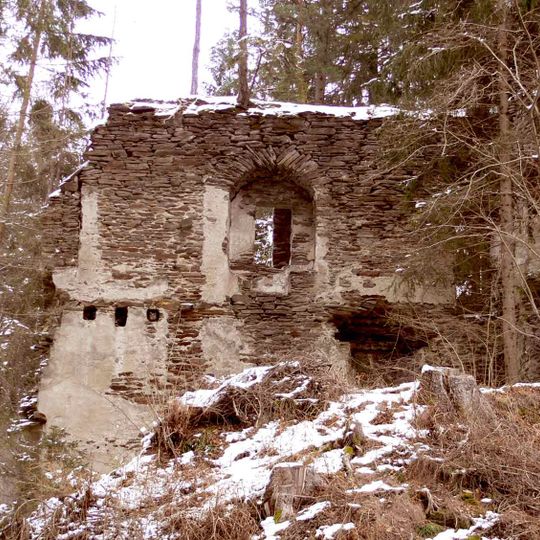
The ruin of Neu-Leonroth consists of a main castle with a slightly distorted rectangular ring wall about 50 by 18 metres enclosing the western, highest part, and a three-storey palas whose eastern wall with secondary window openings survives. A second palas was added to the south and east walls in the 14th or 15th century, containing the castle chapel with a three-eighth apse, where remains of a mineral-painted fresco were found in 1990. A rock-cut cistern lies in the western part of the courtyard, and a gate hall with a late Gothic cross-vaulted second gate stands to the east. The outer ward, about 90 by 25 metres, has three semi-circular flanking towers with key and loophole embrasures.
The oldest surviving masonry dates from around 1300, when the road over the Pack was moved into the Gößnitzgraben. In the mid-14th century the castle belonged to the Lords of Walsee, then to the Lords of Leibnitz, under whom the building was expanded. Georg Matthäus Vischer depicted the still intact but probably abandoned stronghold in 1681, and in 1682 St. Lambrecht Abbey's priests were granted the right to say Mass in the half-ruined chapel.
The castle's name evolved from Leonrode to Neu-Leonroth over centuries, reflecting its changing history. Today the remaining walls tell of an era when such fortifications shaped how people lived and who held power in the region.
The ruin stands on a ridge between the Gößnitzbach and Wöllmißbach, reached from Sankt Martin am Wöllmißberg; the approach climbs steeply and the ground inside is uneven. Artificial ditches cut into the rock surround the site on the southwest, north and northeast, so watch your step near their edges. The gate hall and the preserved second gate with its stone-slab cross vault are the clearest points of orientation.
A cistern carved into the rock with about 3 meters in diameter and 9 meters deep supplied inhabitants during sieges and shows medieval engineering solutions. The rock-cut moat on the north side, carved directly from the natural hill, demonstrates clever use of the terrain for defense.
The community of curious travelers
AroundUs brings together thousands of curated places, local tips, and hidden gems, enriched daily by 93,973 contributors worldwide.