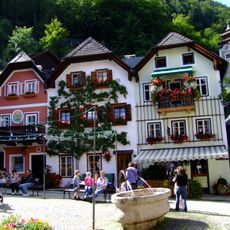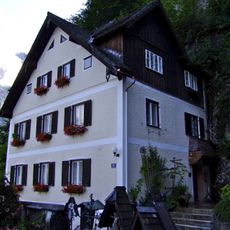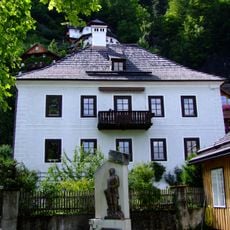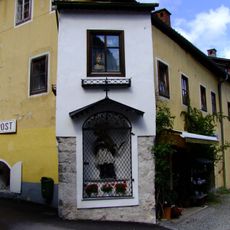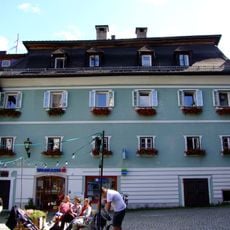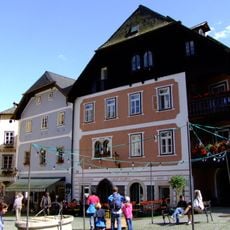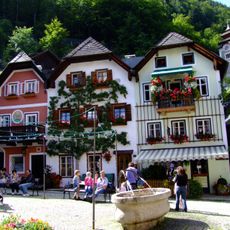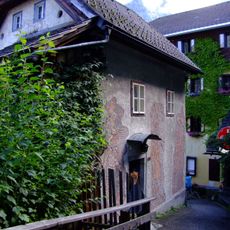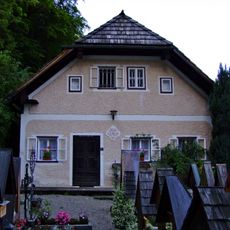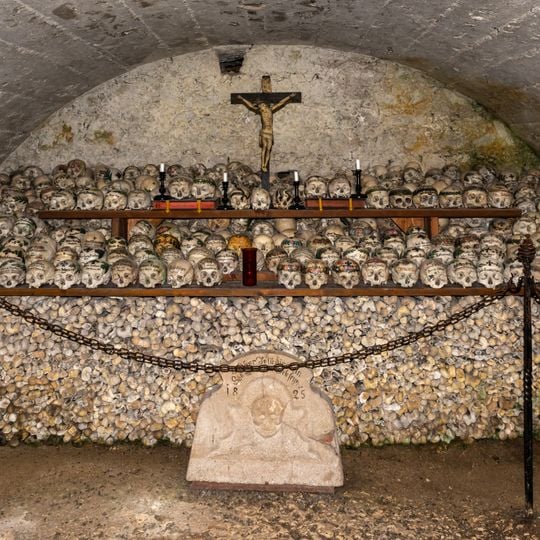
Ossuary in Hallstatt, building in Hallstatt, Austria
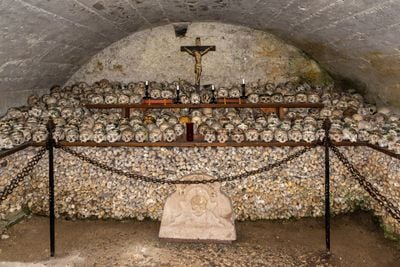
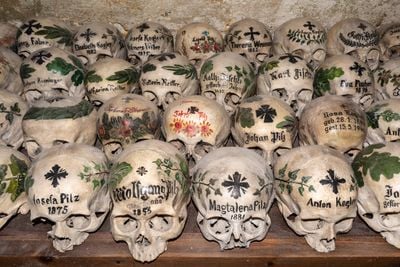
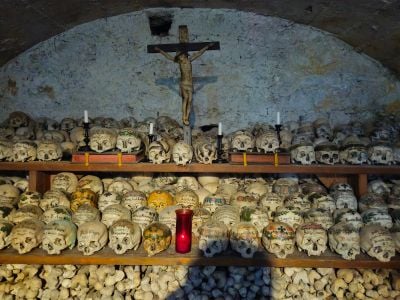
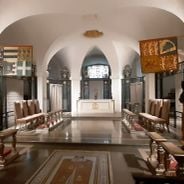
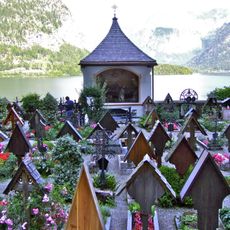
The ossuary in Hallstatt is a small chapel-like building housing over 600 painted skulls neatly arranged in rows. The remains come from residents whose graves were emptied after about ten to twenty years to make space in the mountain-bound cemetery.
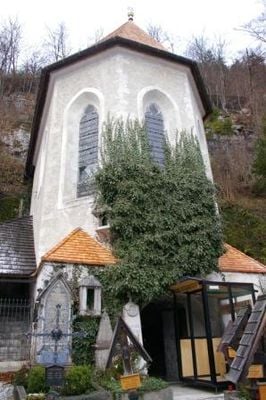
The building dates to the 12th century and became part of St. Michael's Chapel, as the tight settlement between lake and mountain left little burial space. Beginning in the early 1700s, skulls were painted and marked with death dates, a practice that continues to this day.
The ossuary reflects how Hallstatt residents have long honored their dead through painted skulls and personal symbols. Families continue to choose this practice today, keeping the tradition alive as a meaningful way to remember loved ones within their community.
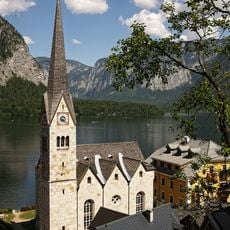
The ossuary sits on a hillside above the lake and is reached on foot from the cemetery behind the Catholic Church; several paths with stairs or cobblestone ramps lead upward. Visitors should be respectful, speak quietly, and not touch the bones, as this is a place of remembrance.
The most recent skull was added in 1983 from a woman who specifically requested to be placed here, and this tradition still allows living Hallstatt residents to ask in their wills for admission. After ten years in the ossuary, each skull is cleaned and repainted to refresh its appearance.
Location: Hallstatt
Fee: Yes
Charge: 1.5 €
Address: Kirchenweg
Opening Hours: Monday-Tuesday 10:00-18:00; Wednesday-Saturday 11:30-15:30; Sunday 10:00-18:00
Phone: +4361348279
GPS coordinates: 47.56364,13.64874
Latest update: December 8, 2025 08:19
Beneath the streets of Europe's cities lies an underground world of burial chambers and crypts that tell the story of how people honored their dead across centuries. These underground spaces, ranging from simple rock-carved tombs to elaborate vaulted rooms, house the remains of millions, along with religious monuments, painted walls, and carved stone that blend Roman, Egyptian, and Christian traditions. Walk through these passages and you encounter the actual practices of death and faith that shaped European life from the 1st century through the 1800s. The frescoes on the walls, the mosaics underfoot, and the carefully arranged bones reveal not just how different cultures buried their dead, but also what they believed about the afterlife and how they saw themselves in the world. Each crypt and catacomb is like a time capsule, a place where the concerns of ancient Romans, medieval Christians, and colonial communities became permanent in stone and bone. From the systematic arrangements in Paris, where millions were moved to former quarries when cemeteries overflowed, to Vienna's imperial burial chambers that housed rulers for centuries, these underground networks show how cities solved practical problems while expressing deep spiritual meaning. Whether decorated with geometric patterns made from thousands of bones, painted with biblical scenes, or simply lined with neat rows of sarcophagi, each site reveals something different about how its people lived and what they thought mattered when life ended.
Hallstatt Museum
195 m
Catholic parish church Hallstatt
27 m
Christuskirche
119 m
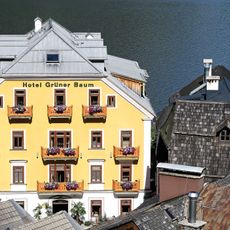
Hotel Grüner Baum
152 m
Friedhof Hallstatt
11 m
Mühlbach
116 m
Dreifaltigkeitssäule Hallstatt
143 m
Löckerbrunnen
196 m
Eibe in Hallstatt
103 m
Salzfertiger-Haus
81 m
Gemeines Markt Rathaus
169 m
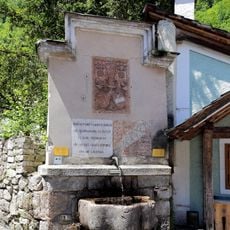
Brunnen
142 m
Kath. Pfarrhof
55 m
Gletschertopf aus Hallstatt
206 m
Gastheimisches Haus
163 m
Wohn- und Geschäftshaus, Faberisches Haus
127 m
Brine pipeline Hallstatt - Bad Ischl - Ebensee
183 m
Bergmeistermühl
161 m
Pastorat-Haus
210 m
Baderplatz 107
190 m
Sollinger Armenhaus
157 m
Wohnhaus, Hinterisches Haus
132 m
Polstermillnerhaus
173 m
Totengräberhaus
17 m
Keferbeck-Haus
128 m
Baderplatz 108
207 m
Holzstiege Bronzezeit
208 m
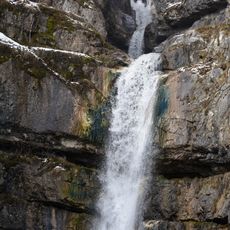
Waterfall
194 mVisited this place? Tap the stars to rate it and share your experience / photos with the community! Try now! You can cancel it anytime.
Discover hidden gems everywhere you go!
From secret cafés to breathtaking viewpoints, skip the crowded tourist spots and find places that match your style. Our app makes it easy with voice search, smart filtering, route optimization, and insider tips from travelers worldwide. Download now for the complete mobile experience.
A unique approach to discovering new places❞
— Le Figaro
All the places worth exploring❞
— France Info
A tailor-made excursion in just a few clicks❞
— 20 Minutes