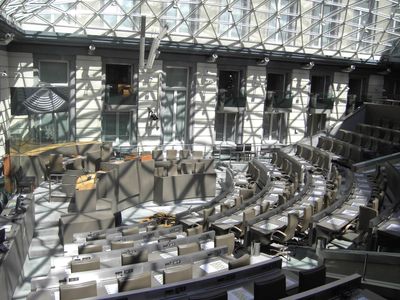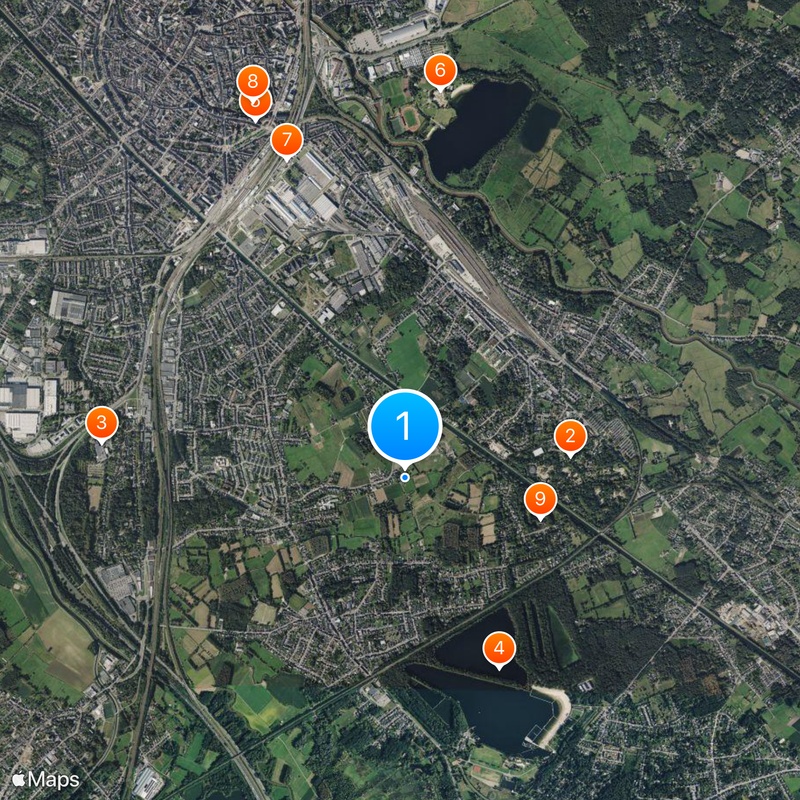
Flanders, Ethnic territory in northern Belgium.
This territory covers the northern portion of Belgium and includes flat agricultural plains, several major cities, and a narrow coastal strip along the North Sea. The landscape shifts between low-lying polders, canals, and densely populated areas with old town centers built from brick and cobblestone.
The area developed as a county from the 9th century and gained importance through wool commerce and textile workshops in medieval towns like Bruges and Ghent. In the 20th century it became the site of heavy fighting during World War I, especially around Ypres.
People speak Dutch with regional variations that differ from province to province, while daily life centers around markets, local festivals, and carnival parades. On Sundays many shops close, and neighborhood bakeries sell traditional pastries often enjoyed with coffee or beer in local gatherings.
Trains and highways link the larger towns, with Brussels Airport acting as the main international arrival point. Many attractions in the cities lie close together and can be explored on foot or by bicycle.
Around Ypres, red poppies grow among preserved trenches and bunkers, now seen as a symbol of remembrance for those who fell in World War I. Each evening at the Menin Gate in the town, a bugle call sounds in honor of the missing.
The community of curious travelers
AroundUs brings together thousands of curated places, local tips, and hidden gems, enriched daily by 91,994 contributors worldwide.