Sint-Annatunnel, Pedestrian tunnel under River Scheldt in Antwerp, Belgium
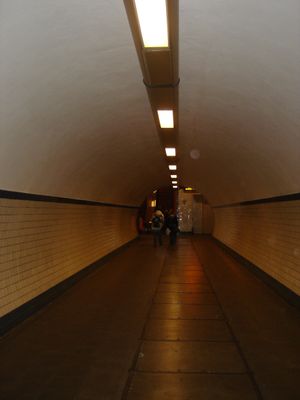
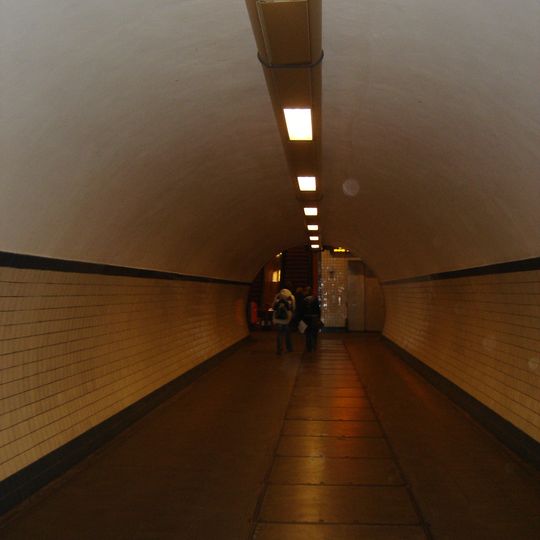
The Sint-Annatunnel is a 572-metre pedestrian and cyclist tunnel under the Scheldt, 31.57 metres below ground, with an internal diameter of 4.30 metres. Its walls are lined with Art Deco ceramic tiles made by Gilliot of Hemiksem, and the ceiling holds a row of square lights in a shallow channel. The floor is paved with large slabs and has a glossy dark brown finish.
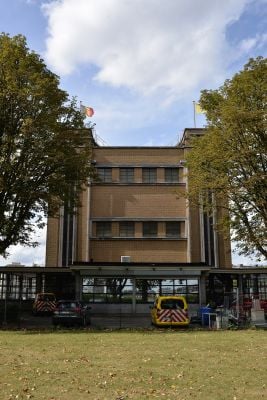
The Sint-Annatunnel was built between 28 June 1931 and 14 August 1933 under the direction of IMALSO, and opened on 10 September 1933. It replaced two ferries, the Sint-Annekensboot and the train ferry Land van Waas. In 1944 retreating German troops blew up the Linkeroever entrance building with a V-bomb; the tunnel reopened only in 1949. It was restored in 1992–1993 and protected as a monument in 1997.
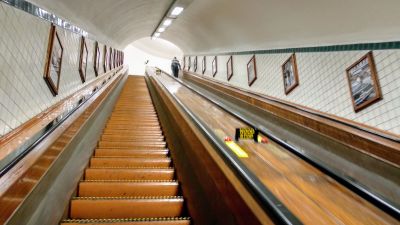
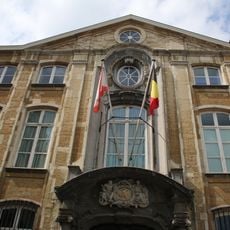
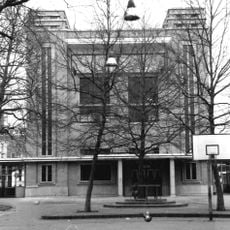
The white-tiled passage displays Art Deco details from the 1930s, particularly visible in the entrance structures above ground. Walking through, visitors notice the original materials and the wooden escalators that remain in daily use.
The tunnel entrance is clearly marked and easy to find; stairs, elevators, or wooden escalators offer options based on mobility needs. It remains open daily and serves well for pedestrians and cyclists who need to cross between the riverbanks quickly.
The tunnel's central tiled strip was laid one tile south of the true midpoint: five tiles separate it from the north wall but only three from the south wall. The poem "elfhonderd meter gedicht" by city poet Joke van Leeuwen was mounted as adhesive letters on the walls in 2009, readable only by walking the tunnel in both directions.
The community of curious travelers
AroundUs brings together thousands of curated places, local tips, and hidden gems, enriched daily by 93,421 contributors worldwide.