Place des Martyrs - Martelaarsplein, Neoclassical square in central Brussels, Belgium.
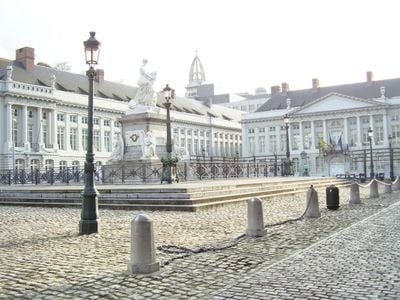
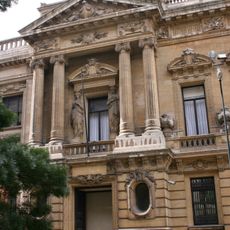
Place des Martyrs is a neoclassical square in central Brussels with uniformly designed buildings arranged on all four sides. The symmetrical facades and classical architectural details frame a rectangular open space that sits above an underground crypt.
An architect redesigned a former bleaching field between 1774 and 1776 into this planned square with a classical layout. It later became a symbol of the 1830 Belgian Revolution when many fighters lost their lives in the struggle for independence.
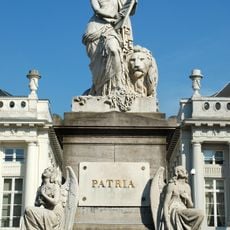
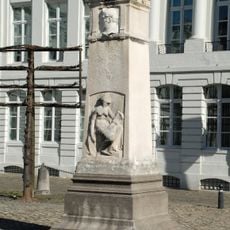
The name honours the 466 dead of the September Days of 1830 buried in the crypt of the Pro Patria Monument, carved by court sculptor Guillaume Geefs in 1836–1838. Each year the square hosts the national commemoration of the revolution; in 1884 socialists disrupted it singing The Marseillaise, and during the First World War crowds gathered here to protest the German occupation.
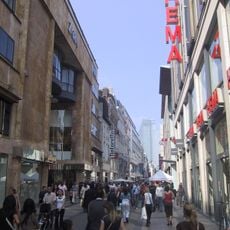
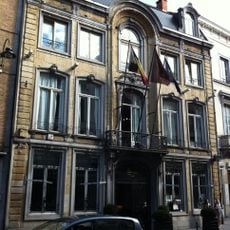
The square lies in the Marais–Jacqmain Quarter, a short walk from the Rue Neuve, and is served by the De Brouckère metro and premetro station on lines 1, 4, 5 and 10. It is entered from the Rue d'Argent, Rue des Roses, Rue des Œillets, Rue Saint-Michel and Rue du Persil. The best view of its double symmetry is from the Rue Saint-Michel; the surrounding buildings, including the Flemish Government cabinet offices, are seen from outside.
Over 400 individuals who died during the revolution rest in an underground crypt beneath the square's cobblestones. This hidden burial chamber makes the place a meaningful location for quiet remembrance.
The community of curious travelers
AroundUs brings together thousands of curated places, local tips, and hidden gems, enriched daily by 94,420 contributors worldwide.