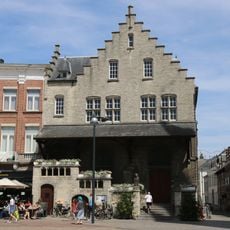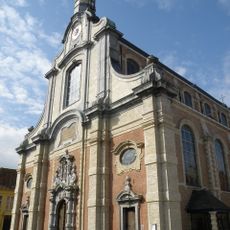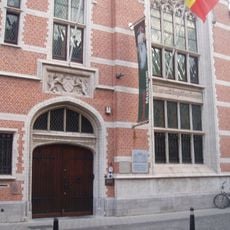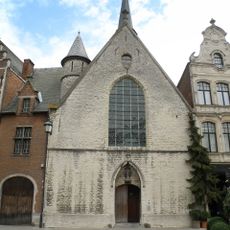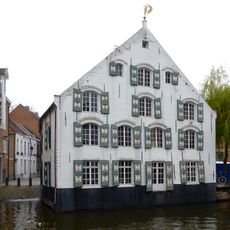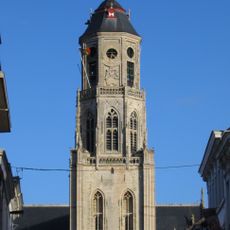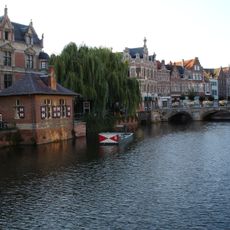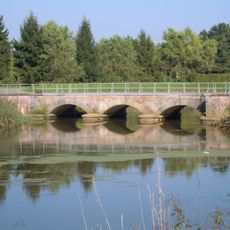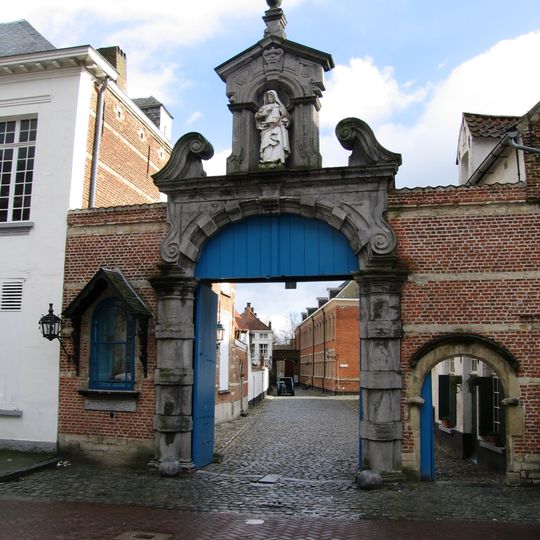
Liers Begijnhof, Medieval religious complex in Lier, Belgium.
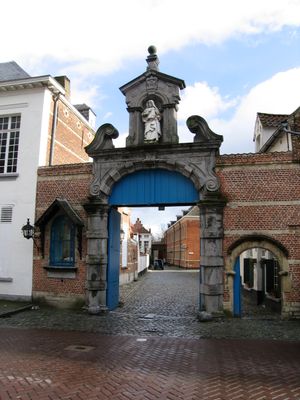
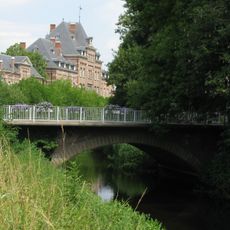
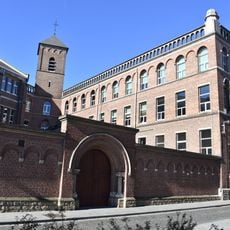
The Liers Begijnhof is a street beguinage in Lier, Belgium: about 2 hectares enclosed by walls and three gates, with some 160 brick houses along eleven cobbled streets. The main gate on Begijnhofstraat is a double baroque portal with a 1777 statue of Saint Begga by M.J. d'Heur. The Grachtkant row along the Kleine Nete has windowless rear facades.
The beguinage arose in the first half of the 13th century, one of the three oldest in Brabant; around 1258 unmarried women settled outside Lier's first wall near the duke of Brabant's hunting lodge. In 1258 it became an autonomous parish under Aleidis of Burgundy, and Jan I took it under his protection in 1274. Between 1389 and 1430 it was enclosed within the city walls; fires and plundering struck it repeatedly, and most houses date from the 17th and early 18th centuries.
The name comes from the Beguines, lay religious women who took no permanent vows. Since the early 18th century each house has carried a saint's name or a biblical scene, such as Het Stalleken van Bethlehem or de Calvarieberg, painted on its facade. The painted wooden Stations of the Cross, made between 1890 and 1920, are the only open-air Way of the Cross in Belgium.
The beguinage is located in the center of Lier and is easy to reach on foot from the main streets. Weekdays tend to be quieter, which makes it easier to walk through the lanes and take in the details of the buildings.
Although the beguinage is listed as part of a UNESCO World Heritage Site, some of its houses are still used as private homes today. This makes it one of the few medieval residential complexes in Belgium where people actually live alongside visiting tourists.
The community of curious travelers
AroundUs brings together thousands of curated places, local tips, and hidden gems, enriched daily by 94,387 contributors worldwide.