Lier town hall, Gothic and Rococo architectural monument in Lier, Belgium
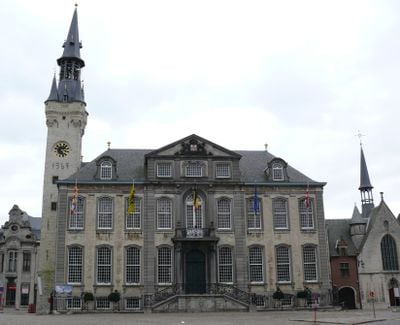
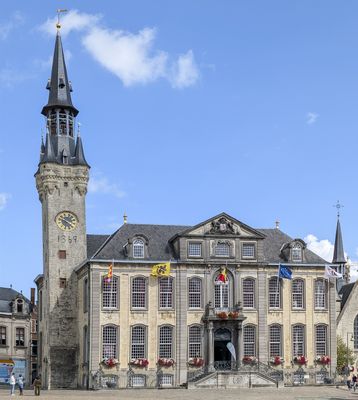
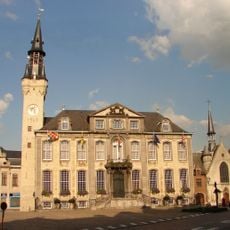
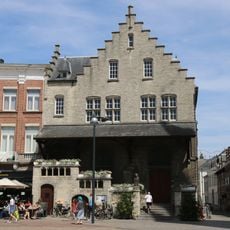
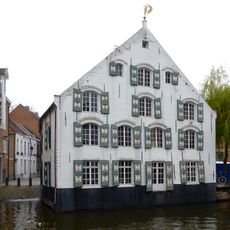
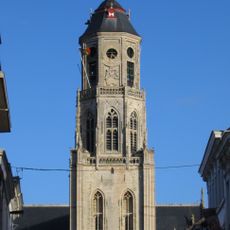
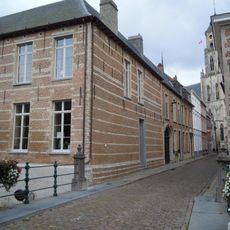
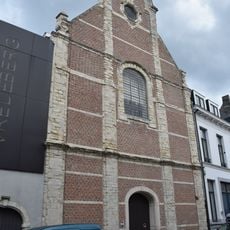
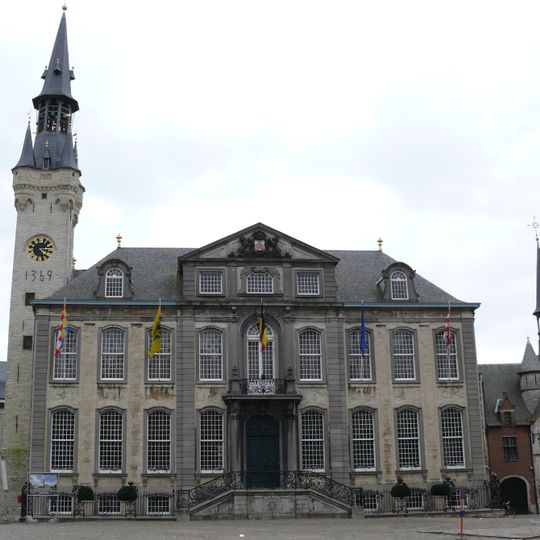
Lier town hall is a building featuring Gothic and Rococo architectural elements located in the city center. Its slender belfry dates to the 14th century, while the main facade displays distinct Rococo characteristics from the 18th century.
A cloth hall was built in 1367 on the back of Lier's thriving wool trade, and the city magistrates met in it. In 1418 the cloth trade moved to the nearby Vleeshuis and the building became the town hall alone. After centuries of use it was rebuilt almost entirely in 1740 by architect Jan Pieter van Baurscheidt de Jonge (1699-1768) in Brabant Rococo style; only parts of the side walls survive from the older building. The belfry beside it had stood since 1369 and was never part of the hall itself.
The building sits at the heart of Lier's civic life and functions as a visible symbol of the town's identity and governance. The belfry's inclusion in a UNESCO World Heritage collection reflects the city's historical standing in the region.
The town hall can only be visited with a city guide; there is no independent access. The belfry stands beside the hall on the Grote Markt and is not part of the building itself. The facade faces the square, with the entrance doorway reached by a short stair.
The belfry is not part of the town hall proper: it already stood here in 1369, before the cloth hall was built against it, and at 42.5 metres it is listed with the other Flemish and northern French belfries as UNESCO World Heritage (ID 943-013).
The community of curious travelers
AroundUs brings together thousands of curated places, local tips, and hidden gems, enriched daily by 93,457 contributors worldwide.