Josaphat Park, Protected heritage park in Schaerbeek, Belgium
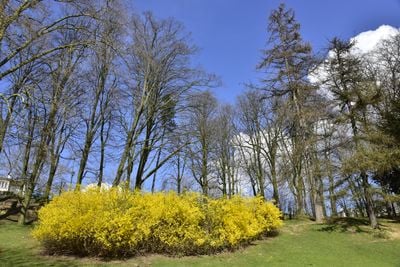
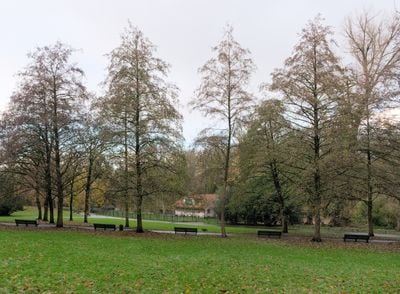
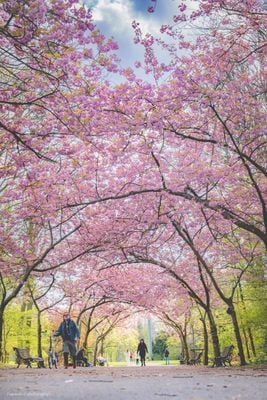
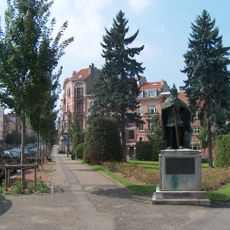
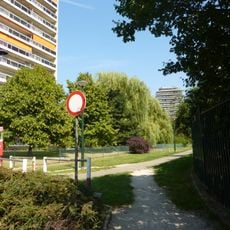
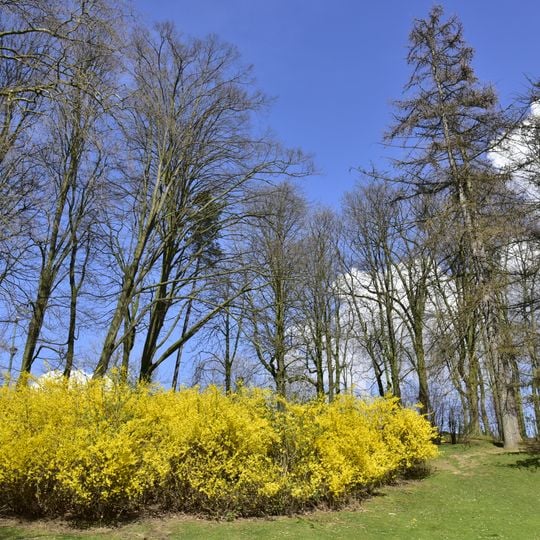
Josaphat Park is a public park in the Brussels municipality of Schaerbeek, laid out with ponds, winding paths, open lawns, and municipal greenhouses. The grounds also contain tennis courts, playgrounds, a minigolf course, an archery range, and three cafes spread across the site.
The Josaphat valley, carved by the Roodenbeek stream, was a popular 19th-century promenade with farmhouse taverns. In 1901 Schaerbeek bought plots from 197 owners; widow Martha resisted until expropriation. The park, designed by Edmond Galoppin with engineer Gaston Bertrand, opened on 26 June 1904 in the presence of Leopold II, covering 4 ha, later expanded to 20 ha.
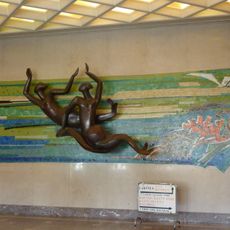
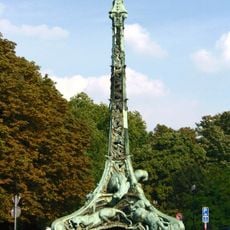
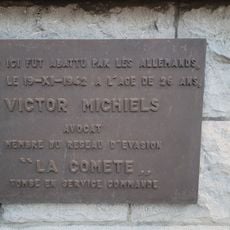
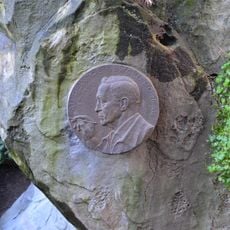
Sculptures by Belgian artists such as Jules Lagae and Victor Rousseau are placed along the paths of the park, integrated into the landscape rather than grouped together. Visitors often come across them unexpectedly while walking, which makes the experience of the park more engaging.
The park is easy to reach on foot or by public transport and is open throughout the day. Comfortable shoes are recommended since the paths cover a fair amount of ground and some sections have gentle slopes.
The spring still known as the Fontaine d'Amour, or Minnebron in Dutch, fed the Josaphat stream. The park's name comes from a pilgrim returning from Palestine in 1574, who found this valley resembled the Valley of Josaphat near Jerusalem and had a votive column with a Latin inscription erected on the Heyligenberg; a Flemish text was added when it was restored in 1666, and it was destroyed around 1792–93.
The community of curious travelers
AroundUs brings together thousands of curated places, local tips, and hidden gems, enriched daily by 93,896 contributors worldwide.