Villa Empain

Log in to your account

AroundUs is a community-driven map of interesting places, built by curious explorers like you. It grows with every review, story, and photo you share.
Connect to save your favorite spots, contribute locations, and create personalized routes.
By continuing, you accept our Terms and Conditions and our Privacy Policy
Add to collection
Map
Suggest a change
Share

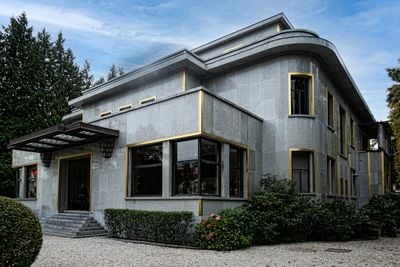
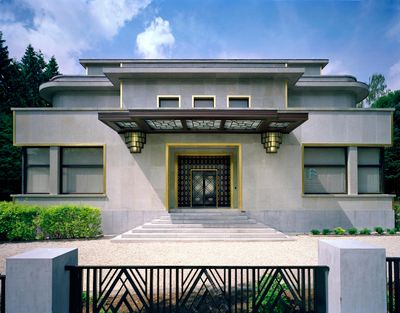
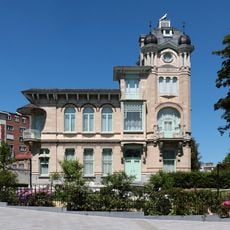
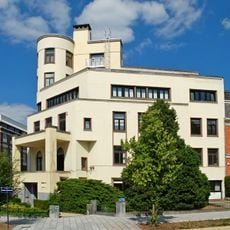
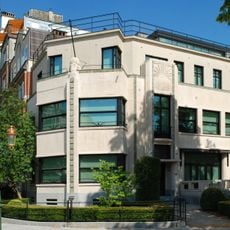
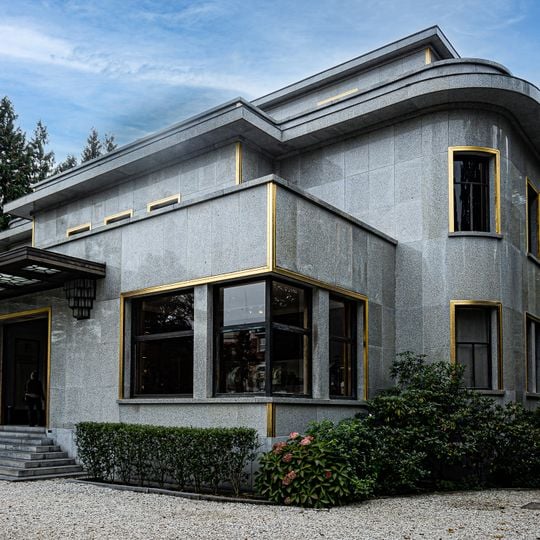
Villa Empain, Art Deco cultural center in Solbosch, Belgium

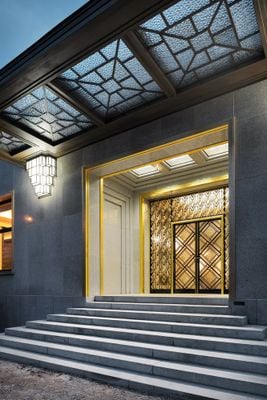
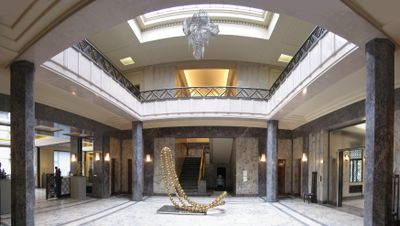
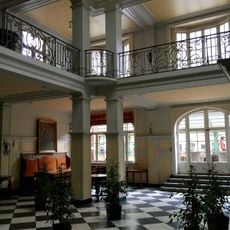
The Villa Empain features marble-clad walls, teak woodwork, and geometric patterns throughout its interior spaces and grand courtyard with a swimming pool.

Baron Louis Empain commissioned architect Michel Polak to design this residence in 1931, later donating it to become a decorative arts museum in 1937.

The Boghossian Foundation manages exhibitions and events in the villa, focusing on international arts and facilitating dialogue between Eastern and Western cultures.

Visitors can explore the Art Deco architecture, attend monthly nocturnal tours, and participate in family storytelling sessions related to current exhibitions.

The building received the European Heritage Award in 2011 after a complete restoration that reversed decades of deterioration and abandonment.

Location: City of Brussels

Inception: December 24, 1929

Architects: Michel Polak

Architectural style: Art Deco

Operator: Boghossian Foundation

Website: https://villaempain.com

GPS coordinates: 50.80750,4.38431

Latest update: May 27, 2025 17:31

Les 50 plus beaux monuments Art déco dans le monde : Paris, New York, Miami, etc.

Art Deco shaped cities from the early 1920s through the late 1930s. The style combines geometric patterns, metallic surfaces, and decorative ornament with functional architecture. Buildings display characteristic vertical lines, stepped forms, and symmetrical facades. The Chrysler Building in New York and Marine Building in Vancouver demonstrate the height and elegance of the style in skyscrapers. The Palais de Tokyo in Paris and Museum of Applied Arts in Budapest show its cultural applications. The Hoover Building in London and Daily Express Building in Manchester represent commercial architecture of the era. Cincinnati Union Terminal, Warner Theatre in Washington, and Wiltern Theatre in Los Angeles document the style's popularity in public buildings. The reach extended worldwide. Edificio Bacardi in Havana, Kavanagh building in Buenos Aires, and New India Assurance Building in Mumbai show regional interpretations. Villa Empain and Stoclet Palace in Brussels, Municipal House in Prague, Tokyo Metropolitan Teien Art Museum, and Universum Kino in Berlin document European and Asian presence. Tiong Bahru Estate in Singapore demonstrates the application to residential developments. The Miami Design Preservation League preserves one of the largest concentrations of Art Deco buildings in the United States. This collection includes public, private, and commercial structures that document the movement's international influence.

Photo spots in Brussels

Brussels offers photographers a range of architectural subjects spanning several centuries. The medieval Grand-Place forms the historic center, while Art Nouveau buildings such as the Musée Horta and Maison Cauchie document the artistic flourishing around 1900. The Atomium, built for the 1958 World's Fair, represents postwar modernism and has become one of the city's most photographed landmarks. The Galeries Royales Saint-Hubert ranks among Europe's oldest covered shopping arcades and displays the elegant construction techniques of the 19th century. The Mont des Arts connects different neighborhoods through a terraced garden with views over the old town. Parc du Cinquantenaire features neoclassical triumphal arches, while the Porte de Hal remains the last surviving medieval city gate. The Basilique du Sacré-Cœur in Koekelberg shows Art Deco influences in its monumental architecture. Quieter spots include the Étangs d'Ixelles, two ponds in the neighborhood of the same name, or the Forêt de Soignes, an extensive beech forest on the city's edge. Avenue Louise connects residential and commercial districts through various architectural styles. Smaller passages such as Galerie Bortier or Passage du Nord complement the major arcades. Rue des Bouchers is known for its restaurant facades, while Rue de la Cigogne features historic townhouses. Photographically interesting details include the Art Nouveau metro station Pannenhuis or the modernist Bâtiment CBR. The Château de Laeken serves as a royal residence and opens to visitors only during the annual opening of the Serres Royales. Le Botanique, a former botanical garden, now houses a cultural center. Place Royale and the adjacent Palais Royal form the political heart of the city. Smaller squares like Place Flagey offer local scenes away from the main routes.

Reviews

Visited this place? Tap the stars to rate it and share your experience / photos with the community! Try now! You can cancel it anytime.

« Villa Empain - Art Deco cultural center in Solbosch, Belgium » is provided by Around Us (aroundus.com). Images and texts are derived from Wikimedia project under a Creative Commons license. You are allowed to copy, distribute, and modify copies of this page, under the conditions set by the license, as long as this note is clearly visible.

Discover hidden gems everywhere you go!

From secret cafés to breathtaking viewpoints, skip the crowded tourist spots and find places that match your style. Our app makes it easy with voice search, smart filtering, route optimization, and insider tips from travelers worldwide. Download now for the complete mobile experience.
Around Us App Screenshot

A unique approach to discovering new places

Le Figaro

All the places worth exploring

France Info

A tailor-made excursion in just a few clicks

20 Minutes