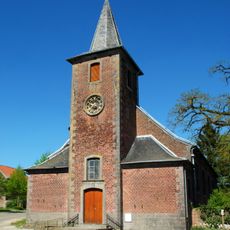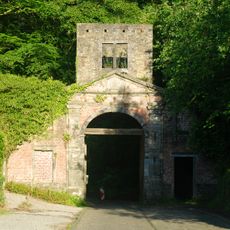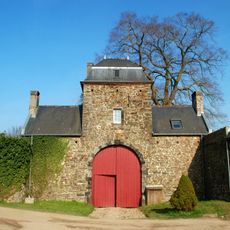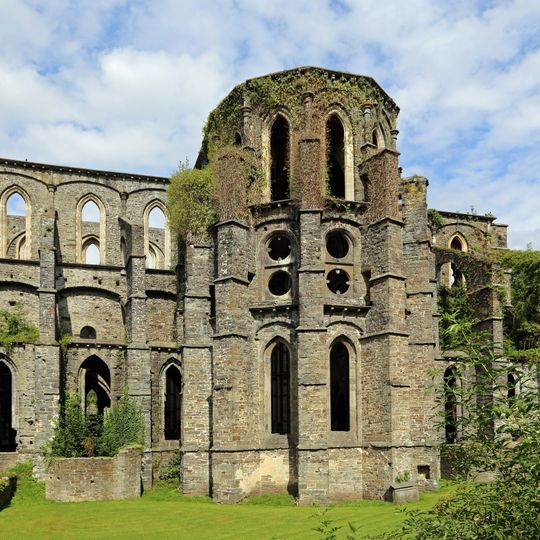
Villers Abbey, Cistercian abbey in Villers-la-Ville, Belgium.
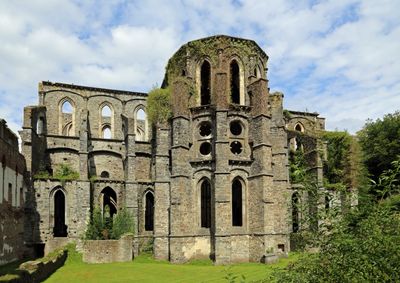
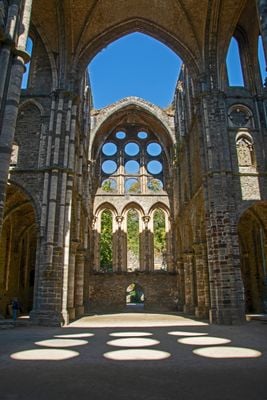
Villers Abbey is a former Cistercian monastery in Belgium whose remains display Romanesque vaults, arches, and rose windows scattered across expansive grounds. The stone structures stand open to the sky, allowing visitors to walk freely through the layout of the medieval complex.
Twelve Cistercian monks and three lay brothers from Clairvaux founded the abbey in 1146 on land granted by local lords; after two moves the community settled by the Thyle. Construction of the present church began in 1197 in Romanesque style and continued in Gothic until 1267, with the choir finished by 1217 and the refectory by 1267. Spanish troops damaged church and cloister in 1544; French Revolutionary troops expelled the monks on 11 December 1796, and a building-materials merchant later quarried the site. The Belgian state bought it in 1893.
The abbey takes its name from Villers-la-Ville, the village in Walloon Brabant where it stands. Since 1992 the site has been run by the APTCV, which organises La Nuit des Chœurs, an annual choir festival: choirs sing classical, gospel, jazz and pop programmes at different spots in the grounds over successive nights, ending with a fireworks display and a concert on the central stage.
The site is located in a wooded area outside the village and can be explored on foot, though it requires time to see the full layout. Visitors should wear sturdy shoes and be prepared for uneven ground between the stone structures.
The abbey church, 94 metres long with vaults reaching 23 metres, was begun in 1197 in Romanesque style, as its porch shows, and continued in Gothic style between 1210 and 1267. Among those buried here are Henry II, Duke of Brabant, his wife Sophie of Thuringia, and John III, Duke of Brabant.
The community of curious travelers
AroundUs brings together thousands of curated places, local tips, and hidden gems, enriched daily by 93,470 contributors worldwide.