Archeologische site Ename, Archaeological site in Ename, Oudenaarde, Belgium.
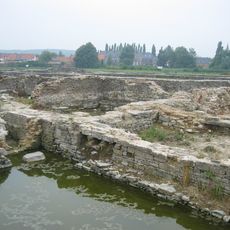
Archeologische site Ename is an excavated settlement in Oudenaarde with building ruins, foundations, and objects spanning several historical periods. The grounds contain an abbey, a church, and residential areas that together show a complex medieval center.
The settlement began in the 10th century as a strategic trading post on the border between the Frankish and German realms. It grew with the founding of the abbey and became a major religious and economic center for the region.
The name Ename survives in the written record as the main seat of Lotharingia, as one historical source calls it. Two churches, Saint Salvator and Saint Lawrence, marked the growth of the port settlement beside the castle. Excavated kitchen waste shows the elite ate pork, brown bear, red deer, crane and wild boar, game reserved for the nobility.
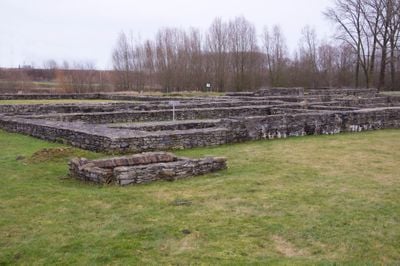
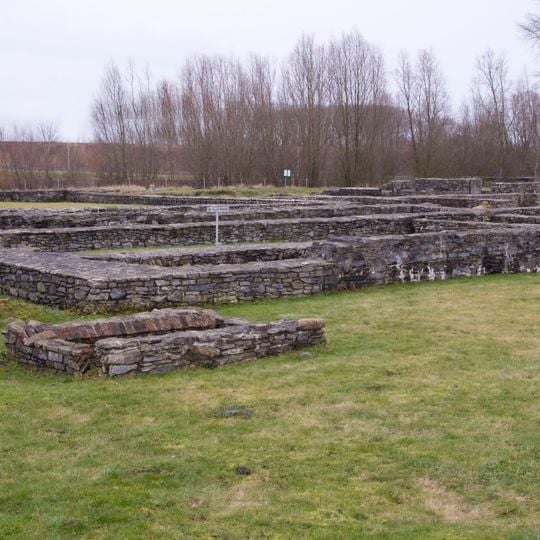
The eight-hectare site lies on the Scheldt in Ename, a submunicipality of Oudenaarde. The exposed stone wall footprints stand in grass, with a thin metal post carrying a small sign among the central walls. The Provincial Heritage Centre beside the abbey ruins opened in 2012; its permanent exhibition opened on 5 July 2024.
The excavated residence hall inside the castle was built of Tournai limestone and measured 40 by 10 metres inside, probably with an upper floor. Kitchen waste found there shows the elite ate pork, brown bear, red deer, crane and wild boar, and pottery from the Rhineland and Meuse region points to long-distance trade.
The community of curious travelers
AroundUs brings together thousands of curated places, local tips, and hidden gems, enriched daily by 94,126 contributors worldwide.